

You must be logged in to download this resource. Register now if you don't have an account.
Abstract:
In order for English language learners to take full advantage of today’s career and educational opportunities, they need to rise to the higher expectations for academic rigor as outlined in the College and Career Readiness Standards, and achieve measurable outcomes as defined by the Workforce Investment Opportunity Act. How can we meet these rising expectations in our general English language classes? By enriching the content we teach, broadening the contexts of English to include workplace and academic communication, scaffolding rigorous tasks, and increasing the range and frequency of higher order thinking skills. Join this webinar to see how the new edition of Future has risen to today’s higher expectations. We will highlight how the new edition’s reading and writing strands scaffold challenging tasks from the start, and how the Future’s new workplace soft-skill strand engages students’ culture skills in collaborative problem-solving tasks.
You must be logged in to download this resource. Register now if you don't have an account.
Abstract:
Are you teaching your students to think about their thinking? Are you giving them opportunities to build their critical thinking skills to problem solve? Let’s have fun together discovering metacognition activities, strategies, and lessons to build important thinking skills for success in class and in life. Teaching critical thinking is good for ALL students and especially important in reaching those with learning difficulties.
You must be logged in to download this resource. Register now if you don't have an account.
Abstract:
This webinar will provide a research-based framework for teachers and tutors to better understand the most effective sequence for teaching students to read. Understanding why sequence matters and being able to pinpoint where students are along their path will allow teachers to more effectively target lessons to focus on the students' current skill level. Components in learning to read include: phonemic awareness, phonics, fluency, vocabulary, and comprehension
You must be logged in to download this resource. Register now if you don't have an account.
Abstract:
This session provides an overview of first language (L1) use in Ready to Work, a government funded program that combines English language instruction with digital literacy and case management to help beginning level immigrants and refugees gain job readiness skills and explore pathways to college and career success. The presenters review research and literature regarding L1 use in multilingual settings, offer examples from the Ready to Work ESOL classes and ask attendees to consider the role of home language inclusion in creating a collaborative and linguistically appropriate environment for immigrant and refugee students. The session also shares strategies to incorporate students’ L1 knowledge into administrative processes such as intake, registration and advising. Ultimately, the presenters argue, L1 inclusion plays an important role in challenging ideologically rooted monolingual principles and acts as a crucial part of dismantling English-language supremacy and “English Only” mentalities in ESOL settings.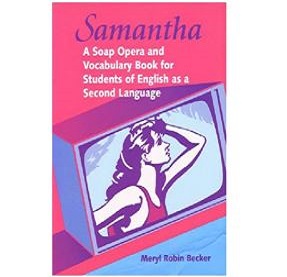
You must be logged in to download this resource. Register now if you don't have an account.
Abstract:
Need exciting material that will make learners look forward to reading? Samantha is a romantic soap opera that is high interest, develops vocabulary, and stimulates discussion on moral, social, and cross cultural issues. Participants will review a chapter and discuss how to use this material in the classroom. http://www.amazon.com/dp/198167604X
You must be logged in to download this resource. Register now if you don't have an account.
Abstract:
The College of Southern Idaho uses the Motivating the Adult Learner module provided by Essential Education to support onboarding of new instructors.
You must be logged in to download this resource. Register now if you don't have an account.
Abstract:
Since 2014, the CUNY Adult Literacy/HSE Program has collaborated with the NYS Department of Education to create the NYSED Teacher Leader Initiative. This project has developed a community of teacher leaders across the state, dedicated to improving teaching practice in our field. These teacher leaders bring our training to educators in their regions, and develop resources and projects of their own. This workshop provides an overview and answers questions about the initiative. We'll use the voices of the NYSED Teacher Leaders themselves to reflect on the lessons we've learned about effective, ongoing, and engaging teacher development. This workshop is for teachers, administrators, state education directors - anyone interested in the resources developed and the lessons learned through this initiative. All materials from this workshop are available at bit.ly/COABE2018CUNY
You must be logged in to download this resource. Register now if you don't have an account.
Abstract:
While the College and Career Readiness Standards (CCRS) prepare students for academic and workforce success, they provide limited support for students who are not proficient in English and need additional language support. The English Language Proficiency (ELP) Standards for Adult Education (AE) can help career and technical education administrators and educators ensure that their English language learners (ELLs) receive the focused and effective instruction they need to meet the CCRS. This session will examine why the ELP standards for AE were developed and how adult education teachers can use them in their classrooms to ensure that ELLs have the opportunity to achieve their full potential.