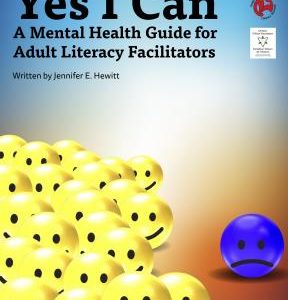
Yes I Can: A Mental Health Guide for Adult Literacy Facilitators
    Author: Jennifer E. Hewitt
    Subject Area: Health, LINCS Resources
    Program Level: Professional Development
    Material Type: Collection
    Language: English
    License: (CC BY-NC-ND 4.0) For license summary click here

    Abstract:

    This guide for adult education facilitators provides information and strategies for supporting adult learners living with mental health conditions or disorders.
    Publication Year
    2017
    This guide for adult education facilitators provides information and strategies for supporting adult learners living with mental health conditions or disorders. Chapters 1 - 5 contain an overview of concepts and general suggestions for supporting learners living with mental health issues. To get the most from this guide, it is suggested that users read chapters 1 - 5 first. Chapters 6 - 16 present information on specific conditions and disorders, and strategies for supporting learners living with these specific issues. Because some learning needs will be similar across multiple disorders, some information and strategies will be repeated in more than one chapter. These chapters, and the strategies they contain, are listed separately in the Table of Contents so that facilitators can look up a specific issue and use only the relevant materials. Chapters 17 – 18 include resources and handouts for learners. Instructors will find the handout topics listed in the Table of Contents. Links to the handouts that correspond with learning strategies are also included in the learning strategy charts, where applicable.
    What the experts say
    Yes I Can provides facts and information about mental health disorders along with the symptoms, causes, risk factors, diagnosis, treatment, and things to observe. It was developed to inform adult educators about mental health disorders and how they present special and unique challenges for adult learners. It is a useful resource for adult educators who are curious for background information, or would like practical tips on working with adult learners who have mental health conditions. Users should read the “How to Use This Guide” section to orient themselves to how each chapter is structured. Some adult educators may need to be reminded that the term “mental health” is used broadly, as is used for the Diagnostic and Statistical Manual (DSM), hence, conditions such as ADHD and LD are included. Note that the chapter on autism spectrum disorders is not up to date on the new labeling system adopted for the DSM-5 (which eliminates “Asperger syndrome” and “PDD-NOS”, etc. as unique labels for some). Also, the tips on making use of learners’ learning styles” could more clearly remind adult educators that the science on learning styles warns against analyzing for learning styles and teaching only to such identified strengths. In general, the Tips sections can be used to augment effective practices that adult educators may already know. Users should also remember to check local policies when they read advice such as to encourage individuals to disclose their “mental health” conditions.
    Resource Notice
    This site includes links to information created by other public and private organizations. These links are provided for the user’s convenience. The U.S. Department of Education does not control or guarantee the accuracy, relevance, timeliness, or completeness of this non-ED information. The inclusion of these links is not intended to reflect their importance, nor is it intended to endorse views expressed, or products or services offered, on these non-ED sites. Please note that privacy policies on non-ED sites may differ from ED’s privacy policy. When you visit lincs.ed.gov, no personal information is collected unless you choose to provide that information to us. We do not give, share, sell, or transfer any personal information to a third party. We recommend that you read the privacy policy of non-ED websites that you visit. We invite you to read our privacy policy.
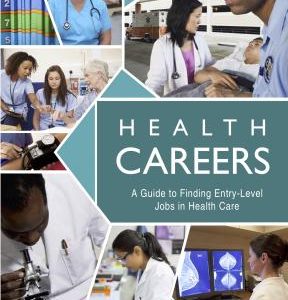
    Health Careers: A Guide to Finding Entry-Level Jobs in Health Care
    Author: Heather Hepler Surrency
    Program Level: Professional Development
    Material Type: Collection
    Language: English
    License: (CC BY-NC-ND 4.0) For license summary click here

    Abstract:

    A targeted resource for adult learners interested in exploring the wide range of entry-level career opportunities in health care.
    Publication Year
    2017
    The Florida Literacy Coalition Health Careers Guide is a targeted resource for adult learners interested in exploring the wide range of career opportunities in health care. Written in plain language, the guide is suitable for learners at a 5th grade reading level or higher as well as for English language learners at an intermediate level or higher. The guide focuses on careers requiring two years or less of training. Providing beneficial information about preparing for a health career, it can be used as a curriculum or a stand-alone resource for students. In addition to providing job skill and training resources, the guide highlights 30 health occupations in four areas: 1) patient care, 2) imaging and diagnostics, 3) administration and support services, and 4) health information and records.
    What the experts say
    A Guide to Finding Entry-Level Jobs in Health Care provides pivotal examples of information on numerous healthcare and health care related occupations that adult educators can use to integrate learning about healthcare careers and career pathways with adult literacy education and English language learning. From an adult literacy perspective, the primary benefit of this document is its practical integration of significant and meaningful content with materials that support adult literacy and English for Speakers of Other Languages (ESOL) learning. The guide includes handouts and instructions as well as charts - all of which are useful tools for both teachers and career counselors.  It also provides links to other documents that practitioners will find helpful in the implementation of an integrative approach to adult literacy and career development. The last page provides "Resources" for students to further explore healthcare careers, training opportunities, and financial aid. Since many of these resources are Florida-centered, teachers in other states may elect to skip this page or develop a resource list customized for their state or program.
    Resource Notice
    This site includes links to information created by other public and private organizations. These links are provided for the user’s convenience. The U.S. Department of Education does not control or guarantee the accuracy, relevance, timeliness, or completeness of this non-ED information. The inclusion of these links is not intended to reflect their importance, nor is it intended to endorse views expressed, or products or services offered, on these non-ED sites. Please note that privacy policies on non-ED sites may differ from ED’s privacy policy. When you visit lincs.ed.gov, no personal information is collected unless you choose to provide that information to us. We do not give, share, sell, or transfer any personal information to a third party. We recommend that you read the privacy policy of non-ED websites that you visit. We invite you to read our privacy policy.
    Career Kits: A Comprehensive Career Preparation Teaching Resource for HSE & ESL Learners Reflecting NYS Regional Labor Market Statistics
    Author: The City University of New York (CUNY) Adult Literacy/HSE/ESOL Program
    Program Level: Professional Development
    Material Type: Collection
    Language: English
    License: (CC BY-NC-ND 4.0) For license summary click here

    Abstract:

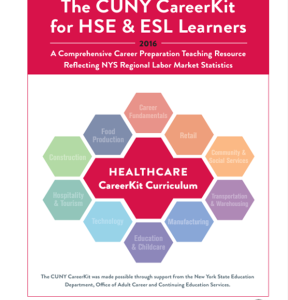
    The New York State Education Department (NYSED) and The City University of New York (CUNY) co-developed the NYSED/CUNY CareerKit, which is a comprehensive career preparation resource for teachers and counselors to equip students with the skills necessary to make informed choices about their career paths in ten industry sectors.
    Publication Year
    2017
    The New York State Education Department (NYSED) and The City University of New York (CUNY) co-developed the NYSED/CUNY CareerKit. It is a comprehensive career preparation resource for teachers and counselors to equip students with the skills necessary to make informed choices about their career paths in ten industry sectors. CareerKit activities are written at the high school equivalency (HSE)/Upper English as a second language (ESL) level, with adaptations possible for Pre-HSE and intermediate ESL levels, and integrates reading, writing, research and math skills. The sectors are Healthcare, Technology, Community & Social Services, Education & Childcare, Manufacturing, Hospitality, Recreation, & the Arts, Food Production, Retail, Construction, and Transportation & Warehousing. There is also a foundational, multisector CareerKit, Career Fundamentals, which introduces students to key questions related to career decision-making.
    Benefits and Uses
    The resource provides teachers and counselors with resources to support students with the skills necessary to make informed decisions/choices about ten career sectors/paths. The resource contextualizes the career exploration activities by integrating reading, writing, research, and math skills. Because each kit has the same unit topics, the resource also allows for instructors to deliver workforce readiness instruction in areas such as career planning, educational pathways, and self-awareness to learners interested in careers in different industries.
    Resource Notice
    This site includes links to information created by other public and private organizations. These links are provided for the user’s convenience. The U.S. Department of Education does not control or guarantee the accuracy, relevance, timeliness, or completeness of this non-ED information. The inclusion of these links is not intended to reflect their importance, nor is it intended to endorse views expressed, or products or services offered, on these non-ED sites. Please note that privacy policies on non-ED sites may differ from ED’s privacy policy. When you visit lincs.ed.gov, no personal information is collected unless you choose to provide that information to us. We do not give, share, sell, or transfer any personal information to a third party. We recommend that you read the privacy policy of non-ED websites that you visit. We invite you to read our privacy policy.
    CK-12 Adult Education FlexBooks
    Author: CK-12 Foundation and Outreach and Technical Assistance Network
    Subject Area: Health, IET, LINCS Resources, Workforce
    Program Level: Professional Development
    Material Type: Collection
    Language: English
    License: (CC BY-NC-ND 4.0) For license summary click here

    Abstract:

    This library of CK-12’s interactive FlexBooks was developed by the Outreach and Technical Assistance Network specifically to support adult educators and learners. The library includes FlexBooks for Adult Basic Education, Adult Secondary Education, English as a Second Language, High School Equivalency, and Career and Technical Education courses. All textbooks are interactive and include instruction, interactive media (including videos), and knowledge checks.
    This library of open-source textbooks can be beneficial to support on-ramp, bridge, or integrated education and training programming, and it can be used for Adult Basic Education, Adult Secondary Education, English as a Second Language, High School Equivalency, and Career and Technical Education courses. All textbooks are interactive and include instruction, interactive media (including videos), and knowledge checks. Three of the textbooks are relevant to health science careers, including a detailed course for home health aides. Given that these resources were developed on the CK-12 platform, they are designed to be easily reused with licensing that allows instructors to adapt and remix the content to be used in different contexts.
    Resource Notice
    This site includes links to information created by other public and private organizations. These links are provided for the user’s convenience. The U.S. Department of Education does not control or guarantee the accuracy, relevance, timeliness, or completeness of this non-ED information. The inclusion of these links is not intended to reflect their importance, nor is it intended to endorse views expressed, or products or services offered, on these non-ED sites. Please note that privacy policies on non-ED sites may differ from ED’s privacy policy. When you visit lincs.ed.gov, no personal information is collected unless you choose to provide that information to us. We do not give, share, sell, or transfer any personal information to a third party. We recommend that you read the privacy policy of non-ED websites that you visit. We invite you to read our privacy policy.
    Publication Year
    2019
    Achieving Healthier Futures One Step at a Time: Communication Tips for Interacting With People With Intellectual and/or Developmental Disabilities
    Author: The Arc of San Antonio, South Texas Behavior Institute, and The YMCA of Greater San Antonio
    Program Level: Professional Development
    Material Type: Collection
    Language: English
    License: (CC BY-NC-ND 4.0) For license summary click here

    Abstract:

    This toolkit provides communication techniques for facilitating a healthy living program for individuals with intellectual and developmental disabilities (I/DD).
    Issue Brief: Health Literacy
    Author: Sabrina Kurtz-Rossi
    Subject Area: Health, LINCS Resources
    Program Level: Professional Development
    Material Type: Collection
    Language: English
    License: (CC BY-NC-ND 4.0) For license summary click here

    Abstract:

    This brief explains what health literacy skills are and why they are important.
    Illinois Community College Board Statewide Contextualized Curricula
    Author: Illinois Community College Board
    Program Level: Professional Development
    Material Type: Collection
    Language: English
    License: (CC BY-NC-ND 4.0) For license summary click here

    Abstract:

    Illinois Community College Board, Division of Adult Education & Literacy, has designed several comprehensive model contextualized curricula, which includes instructions for use, supplemental materials, lesson plans, and related resources. Illinois Community College Board, Division of Adult Education & Literacy, has designed several comprehensive model contextualized curricula, which include:
    • ABE/ASE Curriculum
    • Career Pathways Contextualized Bridge Curriculum
    • Entrepreneurial Contextualized Bridge Curriculum
    • Healthcare Contextualized Bridge Curriculum
    • IT Bridge Contextualized Curriculum
    • Manufacturing Contextualized Bridge Curriculum
    • Transportation, Distribution and Logistics (TDL) Contextualized Bridge Curriculum
    Each set of materials includes instructions for use, supplemental materials, lesson plans, and related resources. All are designed to include academic skill development in reading, writing, math, science, and social studies while building learners' understanding of workplace and/or industry-specific concepts. Additionally, this set of resources includes an Integrated English Literacy and Civics Education (IELCE) Toolkit, designed to support programs in mapping out IELCE-aligned features offered within their programming. Benefits and Uses The materials focus on contextualized lessons to support learners in several high-growth industry areas across multiple learner levels and populations. These materials do contain some Illinois-specific content but can easily be modified to other states’ requirements. The site includes links to PDFs and websites for students to work in independently or as a whole class. Many aspects of the material could be adapted to be suitable for an Integrated Education and Training program or a bridge program that prepares students for entry into several industries. Resource Notice This site includes links to information created by other public and private organizations. These links are provided for the user’s convenience. The U.S. Department of Education does not control or guarantee the accuracy, relevance, timeliness, or completeness of this non-ED information. The inclusion of these links is not intended to reflect their importance, nor is it intended to endorse views expressed, or products or services offered, on these non-ED sites. Please note that privacy policies on non-ED sites may differ from ED’s privacy policy. When you visit lincs.ed.gov, no personal information is collected unless you choose to provide that information to us. We do not give, share, sell, or transfer any personal information to a third party. We recommend that you read the privacy policy of non-ED websites that you visit. We invite you to read our privacy policy.
    Publication Year
    2020
    Get There: Integrated Education and Training Single Set of Learning Outcomes
    Author: Collier City Public Schools: Ariel Pechokas, Mary Jane Balun, Linda Rhines, Valerie Guillaume, and Christine Briggs Indian River State College: Winsome Glaive, Patricia Gagliano, Donna Sizemore, Armon Copeland, and Kelly Amatucci Miami Dade College: Luis Rodriguez, Karin Miller, Jesus Ranero, and Andrea Keener Osceola County Public Schools: Jeff Arnott, Karen Combs, Michelle Overstreet, Donna O’Dell, Sheryl Reyes Cuevas, James Avant, and Dorothy Archard Palm Beach County Public Schools: Fred Barch, John Hay, Pamela Jo Wilson, Brenda Boston, Lisa Anderson, Nicole Howard-Rice, Maria Anwar, Lashan King, and Karin Espinosa Seminole State College: Jane Hudson, Douglas Tayor, Lauri Schoneck, Rachel Slavkin, and Joshua Trujillo
    Program Level: Professional Development
    Material Type: Collection
    Language: English
    License: (CC BY-NC-ND 4.0) For license summary click here

    Abstract:

    This resource provides a comprehensive set of integrated learning outcomes (a single set of learning objectives, or SSLO) for a variety of career pathways, including those for home health aides, certified nursing assistants, logistics and transportation specialists, and building tradespeople and construction design technologists. Some SSLOs are designed specifically for English for Speakers of Other Languages and General Education Development.