Teaching the Core
    Author: Teachingthecore.org
    Program Level: Professional Development
    Material Type: Collection
    Language: English
    License: (CC BY-NC-ND 4.0) For license summary click here

    Abstract:

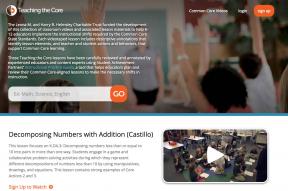
    A collection of classroom videos and associated lesson materials to implement the instructional shifts required by the Common Core State Standards.
    Publication Year
    2016
    The Leona M. and Harry B. Helmsley Charitable Trust funded the development of this collection of classroom videos and associated lesson materials to help K-12 educators implement the instructional shifts required by the Common Core State Standards. Each videotaped lesson includes descriptive annotations that identify lesson elements, and teacher and student actions and behaviors, that support Common Core learning. These Teaching the Core lessons have been carefully reviewed and annotated by experienced educators and content experts using Student Achievement Partners’ Instructional Practice Guide, a tool that helps educators plan and review their Common Core-aligned lessons to make the necessary shifts in instruction.
    Benefits and Uses
    The Teaching the Core video lessons demonstrate standards-based instruction at different grade levels. After opening a free account, use the search feature to find videos by subject and/or grade level. Each video is accompanied by a teacher interview, lesson plan, instructional materials, and student work. The lessons are K-12, so some adjustments and contextualization would need to be made for adult learners. The higher grade levels will be most appropriate for adult educators. Use the Teaching the Core videos for independent study or as part of a professional learning community or professional development program. The most useful feature of the actual videos is the timestamp feature, which allows viewers to go to certain sections of each video and watch for specific teacher and student moves. You may find the following ELA Teaching the Core videos very helpful: “Author’s Message with Multiple Texts” (10th grade) http://www.teachingthecore.org/view/51 and “Connotation & Exile” (9th grade) http://www.teachingthecore.org/view/20.
    Resource Notice
    This site includes links to information created by other public and private organizations. These links are provided for the user’s convenience. The U.S. Department of Education does not control or guarantee the accuracy, relevance, timeliness, or completeness of this non-ED information. The inclusion of these links is not intended to reflect their importance, nor is it intended to endorse views expressed, or products or services offered, on these non-ED sites. Please note that privacy policies on non-ED sites may differ from ED’s privacy policy. When you visit lincs.ed.gov, no personal information is collected unless you choose to provide that information to us. We do not give, share, sell, or transfer any personal information to a third party. We recommend that you read the privacy policy of non-ED websites that you visit. We invite you to read our privacy policy.
    Standards-in-Action: English Language Arts/Literacy Foundational Units to Fulfill the Instructional Shifts
    Author: StandardsWork, Inc.
    Program Level: Professional Development
    Material Type: Collection
    Language: English
    License: (CC BY-NC-ND 4.0) For license summary click here

    Abstract:

    These foundational-level Standards-in-Action (SIA) resources and professional development provide educators with practical knowledge about the key shifts in instruction required to align with college and career readiness standards in English language arts (ELA)/literacy.
    Author(s)
    StandardsWork, Inc.
    Author(s) Organizational Affiliation
    StandardsWork, Inc.
    Publication Year
    2016
    Resource Type
    Informational Material
    Abstract
    The College and Career Readiness (CCR) Standards ELA/Literacy Foundational Units 1-4 were produced by StandardsWork Inc. as part of the Implementing CCR Standards in Adult Education project, under contract to the U.S. Department of Education (Contract # ED-VAE-13-C-0066). The activities that make up Units 1 – 4 will help participants explore what it means to implement CCR standards for ELA/literacy in adult education. Participants will receive a practical and transferable understanding of the fundamental shifts in instruction embedded in CCR standards—including in your state standards—crucial to preparing adult students to meet the real-world demands of college and careers. At the heart of the instructional shifts is carefully examining the texts that students read and the questions students should address as they write and speak about them.
    • Foundational Unit 1 Connecting CCR Standards to Key Advances explores the fundamental elements, structure, and meaning of the CCR standards.
    • Foundational Unit 2 Selecting Texts Worth Reading introduces text complexity, its central role in the CCR standards, and the complex texts students need to read.
    • Foundational Unit 3, Identifying Questions Worth Answering focuses on the value of building students’ ability to draw evidence from texts and teachers’ ability to use text-based questions.
    • Foundational Unit 4 Creating High-Quality Prompts teaches instructors how to build a culminating writing assignment that assesses student knowledge.
    Each ready-to-use unit includes a facilitator’s guide, an annotated PowerPoint presentation, and participant materials. While training is not required before using this resource, fundamental awareness of the CCR standards for ELA/literacy is recommended. Experienced SIA trainers are available to provide this training to states and programs. For more information, please email the LINCS Technical Assistance Center at training@lincs.ed.gov.
    Benefits and Uses
    This resource supports state and program efforts to implement adult education content standards aligned with college and career readiness to support rigorous and high-quality instruction. Usage of the ELA/Literacy Foundational Units 1-4 will strengthen the capacity of adult educators to implement CCR standards to better prepare adult students for success in college and careers. These activities provide the field with opportunities to dig into the CCR standards and explore what it means to adopt CCR-aligned standards in classrooms and how to do so sustainably. Understanding how CCR standards differ from previous sets of standards—and the necessary shifts or advances they call for—is essential to implementing CCR standards well. Engagement in these four units of activities will enable adult educators to identify the most significant elements of CCR standards for ELA/literacy and to determine how best to integrate them into instruction and curriculum. The goal of Units 1 - 4 is for participants to leave with specific ideas, resources, and actions they can implement immediately. Designed primarily for group use, these units also support independent study. The four units should be worked through sequentially. The units can be facilitated during a single daylong training or multiple trainings over several weeks or months. Each ready-to-use unit contains all the materials required to facilitate these training activities, including a facilitator’s guide, an annotated PowerPoint Presentation, and a packet of participant materials. The participant materials include directions, charts, worksheets, answer keys, and other resource materials that guide the use of each unit. The PowerPoint presentations are a digital aid for presenters/facilitators who lead CCR ELA/literacy training activities. Notes are provided within the PowerPoint presentations to help you prepare for each session. This information accompanies the information offered in the facilitator guides—including the research base, rationale, advice, and other guidelines—to provide the support and guidance you may require.
    Resource Notice
    This site includes links to information created by other public and private organizations. These links are provided for the user’s convenience. The U.S. Department of Education does not control or guarantee the accuracy, relevance, timeliness, or completeness of this non-ED information. The inclusion of these links is not intended to reflect their importance, nor is it intended to endorse views expressed, or products or services offered, on these non-ED sites. Please note that privacy policies on non-ED sites may differ from ED’s privacy policy. When you visit lincs.ed.gov, no personal information is collected unless you choose to provide that information to us. We do not give, share, sell, or transfer any personal information to a third party. We recommend that you read the privacy policy of non-ED websites that you visit. We invite you to read our privacy policy.
    Newsela
    Author: Newsela
    Subject Area: LINCS Resources, Reading
    Program Level: Professional Development
    Material Type: Collection
    Language: English
    License: (CC BY-NC-ND 4.0) For license summary click here

    Abstract:

    Newsela builds reading comprehension through leveled articles, real-time assessments, and actionable insights.
    Publication Year
    2016
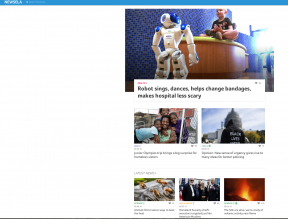
    Newsela builds reading comprehension through leveled articles, real-time assessments, and actionable insights.  Launched in June 2013, Newsela publishes high-interest news articles daily at five levels of complexity for grades 2-12 using Newsela’s proprietary, rapid text-leveling process. The resources are designed to help develop nonfiction fluency and critical-thinking skills necessary for students to master the Common Core standards for informational text. The original version of each text originates from a published news source including the Associated Press, The Guardian, and The Washington Post. In addition to the original version,Newsela presents each text at different Lexile levels which correspond to College and Career Readiness (CCR) standards Levels B-E.  These texts are organized by topics including war & peace, science, and health. Registration (free) is required.
    Benefits and Uses
    Newsela aligns to the CCR standards Key Advance 1 (Regular practice with complex text and its academic language) and Key Advance 3 (Building knowledge through content-rich nonfiction). The contemporary informational texts provided on this website will be useful in working with students to meet the level-specific expectations of the CCR standards for reading. Use this site to:
    • Find appropriately complex non-fiction texts accompanied by multiple choice quiz and sample writing prompts
    • Build content knowledge on current events
    • Supplement existing curriculum resources
    • Connect historical or scientific topics with current events
    • Create your own text sets by pulling together multiple articles on the same topic
    • Access text sets created by other educators.
    Most useful features:
    • High-interest texts appropriate for adult learners.
    • This site is particularly appropriate for instructors who are planning and implementing instruction in multi-leveled classrooms. Because each article is provided at all its varying Lexile levels, this site helps to ensure all students can build their knowledge about the same content.
    • After signing up to use the site, begin with the “Overview” section.
    Resource Notice
    This site includes links to information created by other public and private organizations. These links are provided for the user’s convenience. The U.S. Department of Education does not control or guarantee the accuracy, relevance, timeliness, or completeness of this non-ED information. The inclusion of these links is not intended to reflect their importance, nor is it intended to endorse views expressed, or products or services offered, on these non-ED sites. Please note that privacy policies on non-ED sites may differ from ED’s privacy policy. When you visit lincs.ed.gov, no personal information is collected unless you choose to provide that information to us. We do not give, share, sell, or transfer any personal information to a third party. We recommend that you read the privacy policy of non-ED websites that you visit. We invite you to read our privacy policy.
    Reasoning Through Language Arts (RLA) Instructional Framework
    Author: Kentucky Skills U Morehead State University Adult Education Academy
    Program Level: Professional Development
    Material Type: Collection
    Language: English
    License: (CC BY-NC-ND 4.0) For license summary click here

    Abstract:

    The Reasoning Through Language Arts Instructional Framework enumerates language arts standards, standards descriptions and resources related to teaching to those standards.
    Publication Year
    2018
    The Kentucky Skills U Instructional Framework Series was designed to provide a common instructional foundation for all of Kentucky’s adult education providers. Local adult educators provided the impetus for this project. The Reasoning Through Language Arts Instructional Framework enumerates language arts standards, standards descriptions and resources related to teaching to those standards. Many of the resources are Kentucky-based, but users from any state can create an account to have access to full lesson plans and materials.  There are many links to a range of resource materials.
    What the experts say
    Reasoning Through Language Arts (RLA) Instructional Framework is a comprehensive resource which provides instructors with significant reference material, professional development support, lesson and skills banks, teaching resources and materials for learners. Instructors can work independently, and might also benefit from cohort work in exploring the resource, sharing materials used and developing their own adaptations as necessary. The team of adult educators who created the RLA Frameworks are to be commended for creating a readable set of standards and directly linking those standards to practice in one document. The document is well-designed, clear, and easy to use. And, the resources are well-matched to the standards as well as potentially interesting and engaging for adult learners.
    Resource Notice
    This site includes links to information created by other public and private organizations. These links are provided for the user’s convenience. The U.S. Department of Education does not control or guarantee the accuracy, relevance, timeliness, or completeness of this non-ED information. The inclusion of these links is not intended to reflect their importance, nor is it intended to endorse views expressed, or products or services offered, on these non-ED sites. Please note that privacy policies on non-ED sites may differ from ED’s privacy policy. When you visit lincs.ed.gov, no personal information is collected unless you choose to provide that information to us. We do not give, share, sell, or transfer any personal information to a third party. We recommend that you read the privacy policy of non-ED websites that you visit. We invite you to read our privacy policy.
    Educational Methodologies of Personal Finance
    Author: National Financial Educators Council
    Program Level: Professional Development
    Material Type: Collection
    Language: English
    License: (CC BY-NC-ND 4.0) For license summary click here

    Abstract:

    This guide presents research-based design principles for developing financial literacy instructional materials.
    2024 STAR Research Review
    Author: John Sabatini, PhD and Elizabeth L. Tighe, PhD
    Subject Area: LINCS Resources, Reading
    Program Level: Professional Development
    Material Type: Collection
    Language: English
    License: (CC BY-NC-ND 4.0) For license summary click here

    Abstract:

    The overarching goal of the research review is to update the STudent Achievement in Reading (STAR) community on evidence-based reading research that may inform the STAR training or practitioners’ instructional approaches. This thematic synthesis reviews selected studies on comprehension development. One set of studies focused on foundational reading skills, such as decoding, vocabulary, and morphology, which are crucial for basic or functional reading comprehension. Another set of studies stressed the importance of developing higher-order comprehension skills necessary to becoming a proficient academic reader. This is achieved by having students engage in complex literacy tasks or by providing support while monitoring their engagement and well-being.  This research review provides an overview of recent research conducted in each of these areas, enriching STAR’s evidence-based reading practices and contributing to a richer framework in support of adult literacy development.
    Benefits and Uses
    The STAR Research Synthesis provides the field with up-to-date information on promising practices, challenges, and new developments in the science of reading that adult education instructors and administrators can use in EBRI implementation.
    Resource Notice
    This site includes links to information created by other public and private organizations. These links are provided for the user’s convenience. The U.S. Department of Education does not control or guarantee the accuracy, relevance, timeliness, or completeness of this non-ED information. The inclusion of these links is not intended to reflect their importance, nor is it intended to endorse views expressed, or products or services offered, on these non-ED sites. Please note that privacy policies on non-ED sites may differ from ED’s privacy policy. When you visit lincs.ed.gov, no personal information is collected unless you choose to provide that information to us. We do not give, share, sell, or transfer any personal information to a third party. We recommend that you read the privacy policy of non-ED websites that you visit. We invite you to read our privacy policy.
    Publication Year
    2024
    Embracing AI for Reading Instruction
    Author: Laurie Martin
    Program Level: Adult Basic Education
    Language: English
    License: (CC BY-NC-ND 4.0) For license summary click here

    Abstract:

    Busy teachers often need more time to plan lessons and find materials for teaching reading skills to students. Embracing AI can be a game changer for planning lessons and gathering materials to deliver instruction in each of the four components of reading. Participants will learn about free AI tools for teaching phonics, fluency, vocabulary, and comprehension. Save time and tailor instruction to meet your students' needs with tools like ChatGPT, Gemini, and more. Original webinar date: October 9, 2025 Webinar recording link: https://youtu.be/BNZhj5zsaK0
    Recognizing and Responding to Dyslexia in Adults
    Author: Laura Axtell
    Subject Area: Reading
    Program Level: Adult Basic Education
    Language: English
    License: (CC BY-NC-ND 4.0) For license summary click here

    Abstract:

    Most adults with dyslexia don't even know they have it. During this interactive webinar, Laura will provide attendees with information about dyslexia and share a simple screening instrument to identify characteristics of dyslexia in adults. She will provide research-based reading instruction methods and additional resources that are highly effective for adult learners with dyslexia. Original webinar date: May 15, 2024 Webinar recording link: https://youtu.be/8vUHkv9Pshc