
You must be logged in to download this resource. Register now if you don't have an account.
Abstract:
Since 2014, the CUNY Adult Literacy/HSE Program has collaborated with the NYS Department of Education to create the NYSED Teacher Leader Initiative. This project has developed a community of teacher leaders across the state, dedicated to improving teaching practice in our field. These teacher leaders bring our training to educators in their regions, and develop resources and projects of their own. This workshop provides an overview and answers questions about the initiative. We'll use the voices of the NYSED Teacher Leaders themselves to reflect on the lessons we've learned about effective, ongoing, and engaging teacher development. This workshop is for teachers, administrators, state education directors - anyone interested in the resources developed and the lessons learned through this initiative. All materials from this workshop are available at bit.ly/COABE2018CUNY
You must be logged in to download this resource. Register now if you don't have an account.
Abstract:
An overview of the national Educate & Elevate campaign. Ways you can engage your community, staff, and students in advocacy efforts that impact important legislative discussions and promotes program services. Basic advocacy information and practical ways that instructors can incorporate advocacy in their classrooms and become better advocates for their students. Examples of how adult education teachers provide advocacy through a series of classroom taught lessons, class outings, service projects, and volunteer work. Links to the Educate & Elevate Campaign Toolkit, resources, lesson plans, and examples of advocacy activities and events that can be replicated in the ABE and ESOL classrooms.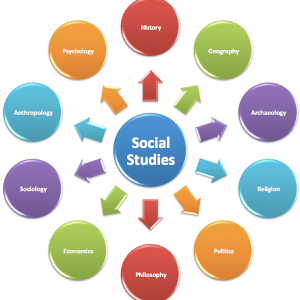
You must be logged in to download this resource. Register now if you don't have an account.
Abstract:
Participants learn to create, deliver, and vary classroom practices teaching social studies with a multiplicity of disciplines including history, geography, math, science, and technology. Participants and their students will be rewarded with challenging and motivating lessons that will prepare students for life-skills and assessment challenges. Ideas and examples in lesson planning for the interactive social studies classroom are provided. Hands-on activities such as maps, games, hard-copies, and computer-based interactions create a rewarding balance for instruction. Participants will discover free resources— materials and websites—that can be used for constructing lessons and activities. Work with vocabulary, timelines, map distance predictions, science tables, civil rights, presidents, word problems, enduring issues, and more. Participants will complete best practices, play games, and share feedback throughout the workshop.
You must be logged in to download this resource. Register now if you don't have an account.
Abstract:
This workshop will guide instructors on how to contextualize social studies content (particularly civics & government) found on the Social Studies GED® test and connect that content with critical reading skills. It will begin with a model lesson using the essential question found in the title of the workshop: Who are “We the People?" The workshop will provide activities and texts adaptable and suitable for a variety of reading levels. It will model and encourage Freirian methods of instruction that stress student-led activities that increase critical thinking and contextualized learning. It will review and utilize adult learning principles.
You must be logged in to download this resource. Register now if you don't have an account.
Abstract:
With the introduction of the College and Career Readiness Standards (CCRS), the changes to the High School Equivalency (HSE) exams, and the increases in employer expectations, students' needs are changing, but it's not realistic to offer separate curriculum for each individual's unique needs. Nor is it possible to build an entirely different program for each pathway (HSE, college-prep, job-training, etc). However, through project-based learning, more of those needs can be met more consistently and more realistically. Through this arrangement, learners gain not only experience and demonstrate a higher level of learning and application, but also create useful cumulative projects, that even have potential to be used in the real world. In this workshop, practitioners who are in the trenches- will dug into some integrated, project-based curriculum developed by teachers who are in the thick of things.- Participants explored a cross-content unit plan addressing language arts (reading, writing, and listening/speaking) and social studies content. The unit plans are designed to address the CCRS to meet the needs of HSE students. Strategies for multi-level and drop-in settings were discussed. Practitioners were also guided/supported in developing additional and/or adapting teaching plans that are specific to their students' needs and share developed plans with other practitioners. ATTACHMENTS: Cross Content Unit Planning Notes Example Combined Resource Social Studies Unit Example Combined Resource Social Studies Unit Instructional Strategy Resources Unit 1 Weekly Overview COABE Pre Conference Crossing Borders
You must be logged in to download this resource. Register now if you don't have an account.
Abstract:
Session Abstract: "Just as students draw on their literacy skills to understand science and social studies matter, students need numeracy skills to interpret science and social studies material. During this session, you can expect to experience activities you can use in classes. These activities will help students access non-textual information and reason from data." ATTACHMENTS: SfA Math for Science and Social Studies Issue 42 Online flyer 2 sides
You must be logged in to download this resource. Register now if you don't have an account.
Abstract:
How can adult education instructors maximize teaching time in the classroom? Use interdisciplinary infographics! This presentation explores how ready-made authentic infographics can be used as a tool to engage students in constructing meaningful knowledge, and gaining conceptual understanding, of real-life math as they explore it through the lens of infographics. This presentation contains links to resources that model how students can create their own infographics that demonstrate their understanding of, and connections within and between, a specific content area and the numeric data that supports the subject matter. Though this presentation focuses on how infographics can be used in the math classroom, connections to social studies and writing activities are made explicit. The resource section provides educators with numerous websites that they can access to get started using infographics in the classroom. In the workshop at COABE 2016, we created a simple infographic which is pictured. ATTACHMENTS: How To Contextualize Math Using Infographics 1You must be logged in to download this resource. Register now if you don't have an account.
Abstract:
Enjoy this site of accumulated GED resources organized by subject area. Many of the sites have worksheets or tracking sheets that can be downloaded for students. I have taught GED prep for over 23 yrs., and have plenty of resources to share. Feel free to contact me: jerry.graham.bend@gmail.com