
You must be logged in to download this resource. Register now if you don't have an account.
Abstract:
What is your vision for your adult education program? Where is your program now? Look at your program through a different lens. Manage for today, with an eye toward the future. These round tables will help you to develop your own program evaluation process so that you can plan for long-term success of your participants, your program, and your community. We will share with you sound practices for developing and managing five key areas: programming, instruction, accountability/data, outreach, and administration. Join us and leave with a host of electronic tools to assist you!
You must be logged in to download this resource. Register now if you don't have an account.
Abstract:
The Adult Basic Education for College & Career (ABECC) program at Pima Community College in Tucson, Arizona, has been developing successful Integrated Basic Education and Skills Training (IBEST) programs as an IET instructional model since 2013. This session will explore how students and instructors who have participated in IBEST programs experience this collaborative model. Hear from students about what aspects of this integrated approach they identify as having been the most critical to improving their academic performance. Learn from IBEST instructors how they approach co-planning lessons and assignments and co-teaching in the classroom.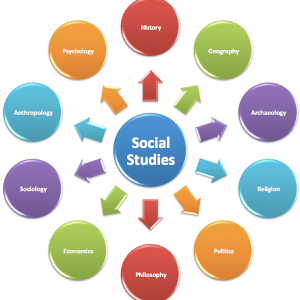
You must be logged in to download this resource. Register now if you don't have an account.
Abstract:
Participants learn to create, deliver, and vary classroom practices teaching social studies with a multiplicity of disciplines including history, geography, math, science, and technology. Participants and their students will be rewarded with challenging and motivating lessons that will prepare students for life-skills and assessment challenges. Ideas and examples in lesson planning for the interactive social studies classroom are provided. Hands-on activities such as maps, games, hard-copies, and computer-based interactions create a rewarding balance for instruction. Participants will discover free resources— materials and websites—that can be used for constructing lessons and activities. Work with vocabulary, timelines, map distance predictions, science tables, civil rights, presidents, word problems, enduring issues, and more. Participants will complete best practices, play games, and share feedback throughout the workshop.
You must be logged in to download this resource. Register now if you don't have an account.
Abstract:
This workshop delivers real-world financial topics and tools with a mathematical connection. Participants will work with financial literacy activities used in ESL and ABE/ASE instruction. Lessons include best practice activities, background economics information, and personal finance content. Activities are presented with varied lesson delivery styles reaching a variety of learning styles helping learners make informed money decisions positively affecting their lives. It will be emphasized that financial literacy is meant to be learned and practiced in an interactive and technological environment. Students learn to apply mathematics to real-world financial situations. Participants interact with tactile, games, scenarios, hard-copies, documents, websites, and computer interactive spreadsheets.
You must be logged in to download this resource. Register now if you don't have an account.
Abstract:
Does your current math material make you feel boxed in? Learn how I used OER to create an inexpensive, updatable, and editable algebra textbook for my GED® class, and work together to create new materials to share. Together we can Expand our Horizons and Soar to New Heights in math content delivery.
You must be logged in to download this resource. Register now if you don't have an account.
Abstract:
How can educators help adult English language learners develop close reading strategies that lead to success in both academic and workplace contexts? In this workshop the presenter discusses and participants explore three informational text-close reading strategies: responding to text-dependent questions using citation of evidence, paraphrasing and vocabulary building, and jigsaw reading.
You must be logged in to download this resource. Register now if you don't have an account.
Abstract:
Approximately one-third of the U.S. workforce works in service-sector industries such as restaurants and hotels, and the number of employees in these industries is on the rise. In this session, presenters will share results from an analysis of the most recent PIAAC data (2012/14), examining and comparing demographic profiles and characteristics of service-sector workers by their literacy skill levels. In addition, participants will learn how to best support service-sector workers in their upskilling efforts and hear examples of such support from a leading policy expert of adult education and upskilling. Lastly, participants will engage in a group discussion about how these research findings can help adult learners.
You must be logged in to download this resource. Register now if you don't have an account.
Abstract:
This workshop will guide instructors on how to contextualize social studies content (particularly civics & government) found on the Social Studies GED® test and connect that content with critical reading skills. It will begin with a model lesson using the essential question found in the title of the workshop: Who are “We the People?" The workshop will provide activities and texts adaptable and suitable for a variety of reading levels. It will model and encourage Freirian methods of instruction that stress student-led activities that increase critical thinking and contextualized learning. It will review and utilize adult learning principles.