
- determine whether we are pushing our students to produce the most rigorous, level-appropriate language and thinking possible;
- identify challenges to students’ learning;
- plan instruction to address and assess the most relevant standards; and
- plan for scaffolding and other supports to better meet our students’ needs.
- Analyze and reflect on instructional tasks through the process of identifying the relevant disciplinary practices and ELP Standards
- Understand the what, why, and how of utilizing the ELP Standards in planning and instruction
- Download and print the module’s resources (which appear in the Resources tab beginning on slide 4) before you begin the training.
- Please turn off pop-up blockers in your browser for this module.
- Use the following instructions for navigating through this module using your keyboard and using JAWS assistive technology:
- Use the Tab key to move forward through each screen’s content. Press Shift + Tab to move backwards. A box surrounds the object that is currently selected.
- To select the skip navigation button and the navigation buttons that appear at the bottom of the screen (Play, Pause, Forward, Back, Volume, Closed Captions and Exit buttons), use the spacebar key.
- Press Shift + Enter to select a navigation button at the top of the screen or a hyperlink.
- For closed captioning select the cc button.
- What process can adult educators follow to understand the content knowledge, analytical skills, and language demands of an instructional task?
- What does task analysis reveal about the demands of instructional tasks in relation to academic content standards and language use?
- Determine whether we are challenging students to produce the most rigorous, level-appropriate, standards-aligned activities;
- Identify roadblocks to students’ understanding; and
- Plan for scaffolding and supports to better meet our students’ needs.
- Understand the value of a task analysis process that examines what adult English Language Learners (ELLs) need to know and do around content knowledge, analytical skills, and language use to accomplish an instructional task; and.
- Use a task analysis process to analyze and reflect on instructional tasks for various levels and content areas.
- Download and print the module’s resources (which appear in the Resources tab beginning on slide 4) before you begin the training.
- Please turn off pop-up blockers in your browser for this module.
- Use the following instructions for navigating through this module using your keyboard and using JAWS assistive technology:
-
- Use the Tab key to move forward through each screen’s content. Press Shift + Tab to move backwards. A box surrounds the object that is currently selected.
- To select the skip navigation button and the navigation buttons that appear at the bottom of the screen (Play, Pause, Forward, Back, Volume, Closed Captions and Exit buttons), use the spacebar key.
- Press Shift + Enter to select a navigation button at the top of the screen or a hyperlink.
- For closed captioning select the “cc” button.
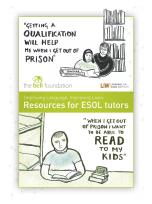
You must be logged in to download this resource. Register now if you don't have an account.
Abstract:
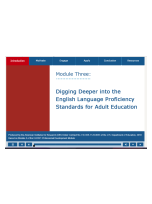
You must be logged in to download this resource. Register now if you don't have an account.
Abstract:
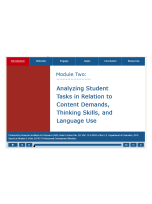
You must be logged in to download this resource. Register now if you don't have an account.
Abstract:
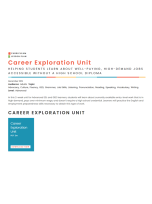
You must be logged in to download this resource. Register now if you don't have an account.
Abstract:

You must be logged in to download this resource. Register now if you don't have an account.
Abstract:
You must be logged in to download this resource. Register now if you don't have an account.
Abstract:
This meeting focused on sharing best practices and challenges in adult education, particularly around ESL programs and workforce development. Participants discussed various initiatives including college and career readiness labs, apprenticeship programs, digital literacy efforts, and strategies for supporting ESL students during challenging times. Key topics included the implementation of Career Gateway classes that simulate workplace experiences, partnerships with employers for workplace learning, and the challenges of providing services to ESL students in correctional settings. Several participants shared resources including AI literacy lesson plans, digital literacy frameworks, and community partnerships, while others discussed the importance of trauma-informed instruction and multi-generational impact of adult education programs. The meeting highlighted successful collaborations between state directors, local programs, and employers, with participants emphasizing the value of working together to create pathways for adult learners.Summary
College Career Readiness Program Development
ESL Workforce Preparation Programs Update
Education Collaboration and Workforce Challenges
AI in Education and Literacy
IET Programs in Correctional Settings
Adult Education Best Practices Sharing
Adult Education Best Practices Sharing
Meeting date: March 10, 2026 Meeting recording link: https://youtu.be/qoX5PbooNSw
You must be logged in to download this resource. Register now if you don't have an account.
Abstract:
This meeting focused on sharing best practices and challenges in adult education, particularly around ESL programs and workforce development. Participants discussed various initiatives including college and career readiness labs, apprenticeship programs, digital literacy efforts, and strategies for supporting ESL students during challenging times. Key topics included the implementation of Career Gateway classes that simulate workplace experiences, partnerships with employers for workplace learning, and the challenges of providing services to ESL students in correctional settings. Several participants shared resources including AI literacy lesson plans, digital literacy frameworks, and community partnerships, while others discussed the importance of trauma-informed instruction and multi-generational impact of adult education programs. The meeting highlighted successful collaborations between state directors, local programs, and employers, with participants emphasizing the value of working together to create pathways for adult learners.Summary
College Career Readiness Program Development
ESL Workforce Preparation Programs Update
Education Collaboration and Workforce Challenges
AI in Education and Literacy
IET Programs in Correctional Settings
Adult Education Best Practices Sharing
Adult Education Best Practices Sharing
Meeting date: March 10, 2026 Meeting recording link: https://youtu.be/qoX5PbooNSw
You must be logged in to download this resource. Register now if you don't have an account.
Abstract: