Brewing Brilliance: Adult Education Virtual Coffee Talk
    Author: Steve Schmidt, Shaketta Thomas, and Sharon Bonney
    Subject Area: ESL/ELL, Workforce
    Program Level: Adult Basic Education
    Language: English
    License: (CC BY-NC-ND 4.0) For license summary click here

    Abstract:

    This meeting focused on sharing best practices and challenges in adult education, particularly around ESL programs and workforce development. Participants discussed various initiatives including college and career readiness labs, apprenticeship programs, digital literacy efforts, and strategies for supporting ESL students during challenging times. Key topics included the implementation of Career Gateway classes that simulate workplace experiences, partnerships with employers for workplace learning, and the challenges of providing services to ESL students in correctional settings. Several participants shared resources including AI literacy lesson plans, digital literacy frameworks, and community partnerships, while others discussed the importance of trauma-informed instruction and multi-generational impact of adult education programs. The meeting highlighted successful collaborations between state directors, local programs, and employers, with participants emphasizing the value of working together to create pathways for adult learners.

    Summary

    College Career Readiness Program Development

    Tammy described their college and career readiness lab, which offers various training programs like health sciences and HR, supported by Michigan Works and grants. The lab has created a class called Career Gateway that simulates a job environment, focusing on resume writing, cover letters, and LinkedIn creation for their high ESL population. Adrienne mentioned Louisiana's progress in developing pathways and hiring staff to coordinate between K-12, adult education, and CTE programs. Both Tammy and Adrienne noted challenges in apprenticeships, with limited opportunities and a mismatch between ESL students' needs and available programs.

    ESL Workforce Preparation Programs Update

    The meeting focused on ESL and workforce preparation programs, with Tammy discussing Career Gateway classes for intermediate to advanced students and Raynell presenting a new 8-week civics and citizenship pathway pilot using the USCIS civics test and Burlington English modules. Hannah shared World Relief's approach to teaching Know Your Rights information to refugee students, including memorizing A numbers and emergency contacts, and discussed their transition to online classes using Signal as a communication tool, which has maintained attendance despite the pandemic.

    Education Collaboration and Workforce Challenges

    Lynnette shared that recent administrative changes have led to more collaborative partnerships and outreach efforts in education, particularly in working with city hall offices to ensure student safety. Dinash discussed a challenge with their 25-year-old initiative in New York State, highlighting a disconnect between their computer technology services and the local workforce needs in the Rust Belt region, where traditional industries have disappeared, leaving a gap between available certifications and actual job opportunities.

    AI in Education and Literacy

    The group discussed using AI to analyze educational data, with Lynnette sharing that 65,000 people in their city lack a high school diploma or GED, and Ashley announced the release of a new digital literacy toolkit. Glenda and Ashley highlighted their work on AI literacy and digital skills training, while Alethea presented Upwardly Global as a resource for helping immigrants and refugees restart their careers in the U.S. through professional training and job placement services.

    IET Programs in Correctional Settings

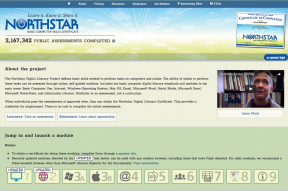
    Tammy explained that county correctional facilities have been unable to implement IET (Individualized Education Training) programs effectively due to high turnover and restrictions on working with violent inmates. Shaketta inquired about successful IET programs in correctional settings, particularly in state prisons, and Kristine shared that Minnesota has developed a digital literacy curriculum that's been adapted for use in correctional settings, noting that their Lindale program in Minneapolis created a modified version of the North Star digital literacy curriculum that's more accessible for learners.

    Adult Education Best Practices Sharing

    The meeting focused on sharing best practices and resources in adult education. Glenda highlighted Texas's successful coordination between education and workforce agencies to streamline services for learners. Nakita discussed South Dakota's new volunteer training program using Monday.com, aimed at increasing classroom support. Adrienne praised Tracy for redesigning their website to better serve students, providers, and partners. Heather shared Memphis's success in workplace learning, particularly through a partnership with a distribution center and an apprenticeship program with IUPAT.

    Adult Education Best Practices Sharing

    The meeting focused on sharing resources and best practices in adult education. Xavier presented AI literacy lesson plans developed by his organization, while Patsy highlighted Minnesota's work on trauma-informed instruction and immigration-related resources. Echo discussed the need to update digital literacy frameworks, emphasizing the importance of literacy skills for accessing vocational programs. Tim shared a powerful success story of a student who went on to achieve academic and professional success, highlighting the impact of trauma-informed education. Sharon, representing COABE, encouraged participants to share their challenges and ideas, offering support and resources. She emphasized the importance of collaboration between state directors, state associations, and local programs, and encouraged participants to register for the upcoming COABE conference.

    Meeting date: March 10, 2026 Meeting recording link: https://youtu.be/qoX5PbooNSw
    Issue Brief: Workforce Preparation
    Author: KayLynn Hamilton
    Subject Area: LINCS Resources, Workforce
    Program Level: Professional Development
    Material Type: Collection
    Language: English
    License: (CC BY-NC-ND 4.0) For license summary click here

    Abstract:

    This brief explains what workforce preparation skills are and why they are important.
    Illinois Community College Board Statewide Contextualized Curricula
    Author: Illinois Community College Board
    Program Level: Professional Development
    Material Type: Collection
    Language: English
    License: (CC BY-NC-ND 4.0) For license summary click here

    Abstract:

    Illinois Community College Board, Division of Adult Education & Literacy, has designed several comprehensive model contextualized curricula, which includes instructions for use, supplemental materials, lesson plans, and related resources. Illinois Community College Board, Division of Adult Education & Literacy, has designed several comprehensive model contextualized curricula, which include:
    • ABE/ASE Curriculum
    • Career Pathways Contextualized Bridge Curriculum
    • Entrepreneurial Contextualized Bridge Curriculum
    • Healthcare Contextualized Bridge Curriculum
    • IT Bridge Contextualized Curriculum
    • Manufacturing Contextualized Bridge Curriculum
    • Transportation, Distribution and Logistics (TDL) Contextualized Bridge Curriculum
    Each set of materials includes instructions for use, supplemental materials, lesson plans, and related resources. All are designed to include academic skill development in reading, writing, math, science, and social studies while building learners' understanding of workplace and/or industry-specific concepts. Additionally, this set of resources includes an Integrated English Literacy and Civics Education (IELCE) Toolkit, designed to support programs in mapping out IELCE-aligned features offered within their programming. Benefits and Uses The materials focus on contextualized lessons to support learners in several high-growth industry areas across multiple learner levels and populations. These materials do contain some Illinois-specific content but can easily be modified to other states’ requirements. The site includes links to PDFs and websites for students to work in independently or as a whole class. Many aspects of the material could be adapted to be suitable for an Integrated Education and Training program or a bridge program that prepares students for entry into several industries. Resource Notice This site includes links to information created by other public and private organizations. These links are provided for the user’s convenience. The U.S. Department of Education does not control or guarantee the accuracy, relevance, timeliness, or completeness of this non-ED information. The inclusion of these links is not intended to reflect their importance, nor is it intended to endorse views expressed, or products or services offered, on these non-ED sites. Please note that privacy policies on non-ED sites may differ from ED’s privacy policy. When you visit lincs.ed.gov, no personal information is collected unless you choose to provide that information to us. We do not give, share, sell, or transfer any personal information to a third party. We recommend that you read the privacy policy of non-ED websites that you visit. We invite you to read our privacy policy.
    Publication Year
    2020
    Building a Digitally Resilient Workforce: Creating On-Ramps to Opportunity
    Author: Digital US
    Program Level: Professional Development
    Material Type: Collection
    Language: English
    License: (CC BY-NC-ND 4.0) For license summary click here

    Abstract:

    This report from the Digital US coalition is the result of a six-month landscape analysis and strategic planning period, laying the groundwork for a new collective impact approach to support both on-ramps to digital skills as well as pathways to new opportunities.
    Compendium of Innovative Practices: Adult Education Bridge Programs and Integrated Education and Training (IET) Programs
    Author: Judith Alamprese and I-Fang Cheng
    Program Level: Professional Development
    Material Type: Collection
    Language: English
    License: (CC BY-NC-ND 4.0) For license summary click here

    Abstract:

    This compendium describes five innovative practices in bridge and integrated education and training (IET) programs as selected by the  Advancing Innovation in Adult Education project.
    Linking adult education to workforce development in 2018–19: Early implementation of the Workforce Innovation and Opportunity Act at the local level (NCEE 2023-001r)
    Author: Stephanie Cronen, Anne Diffenderffer, and Rebecca Medway
    Subject Area: LINCS Resources, WIOA, Workforce
    Program Level: Professional Development
    Material Type: Collection
    Language: English
    License: (CC BY-NC-ND 4.0) For license summary click here

    Abstract:

    This report from a national evaluation of Title II examines the extent to which local adult education providers' instructional approaches and coordination with other agencies in 2018–19 reflected the link between adult education and the overall workforce development system
    Publication Year
    2023
    Enhancing Access to Workforce Training: A Guide to Supporting Multilingual Learners’ Participation in Integrated Education and Training
    Author: Jessie Stadd and Laura Rasmussen Foster
    Program Level: Professional Development
    Material Type: Collection
    Language: English
    License: (CC BY-NC-ND 4.0) For license summary click here

    Abstract:

    This guide supports the development of workforce training programs, including Integrated Education and Training (IET), that maximizes accessibility for multilingual learners. To prepare multilingual learners for success in the workforce, adult education programs can develop workforce training programs, including IET, that maximizes accessibility for multilingual learners, helping them to access and succeed in these programs. The guide describes the required components of IET, potential barriers for multilingual learners, and, strategies for supporting their participation and success in education and workforce training. The strategies focus on four key topics:
    • program design,
    • partnerships,
    • navigation and advising, and
    • instructional approaches.
    For each strategy, the guide summarizes actions to take and additional resources to explore. The guide also provides tips for using a learner-centered approach within each of these strategies.
    Benefits and Uses
    This guide is designed for adult education providers who are already offering IET programming or connections to IET programs. Program designers and staff can help use the strategies described in the guide to help learners build the language skills and workforce knowledge they need to participate and be successful in IET and other education and training opportunities. By using a learner-centered approach and intentionally connecting multilingual learners with IET programs, adult educators can leverage learners’ assets to address their linguistic, academic, workforce, and basic needs barriers and bring learner voice into program design. These practices can help multilingual learners access and succeed in workforce training programs, preparing them for good jobs that enable their economic integration into their communities.
    Resource Notice
    This site includes links to information created by other public and private organizations. These links are provided for the user’s convenience. The U.S. Department of Education does not control or guarantee the accuracy, relevance, timeliness, or completeness of this non-ED information. The inclusion of these links is not intended to reflect their importance, nor is it intended to endorse views expressed, or products or services offered, on these non-ED sites. Please note that privacy policies on non-ED sites may differ from ED’s privacy policy. When you visit lincs.ed.gov, no personal information is collected unless you choose to provide that information to us. We do not give, share, sell, or transfer any personal information to a third party. We recommend that you read the privacy policy of non-ED websites that you visit. We invite you to read our privacy policy.
    Publication Year
    2024
    How Simulation Expanded Capacity and Improved Safety in Heavy Equipment Education at Alfred State College
    Author: Jeffrey Stevens and Alan Limoges
    Subject Area: Workforce
    Program Level: Adult Basic Education
    Language: English
    License: (CC BY-NC-ND 4.0) For license summary click here

    Abstract:

    Limited access to equipment and ensuring apprentice safety remain two of the most persistent challenges facing vocational institutions, and the Heavy Equipment Operation course at Alfred State was no exception. While the program itself was thriving, instructors struggled to provide every student with sufficient hands-on time on live equipment. This webinar will examine Alfred State College’s decision-making process, implementation considerations, and resulting outcomes, providing a real-world example of how simulation can complement hands-on equipment training in vocational education. Join Jeffrey Stevens, dean of the School of Applied Technologies at Alfred State College, and Alan Limoges, manager of Product Growth at CM Labs, as they share how simulation-based training evolved from concept to impact, reducing training time by up to 30%, expanding institutional capacity, and giving students more opportunities to practice safely and effectively. Key takeaways: -Key considerations Alfred State College evaluated when integrating simulation into its curriculum -Why simulation has proven effective in improving safety, capacity, and training outcomes -How heavy equipment vocational programs can apply a similar approach to support student engagement and jobsite readiness Original webinar date: February 19, 2026 Webinar recording link: https://youtu.be/G2GKJidO72c Webinar resource link: https://hubs.la/Q041p3XW0