
You must be logged in to download this resource. Register now if you don't have an account.
Abstract:
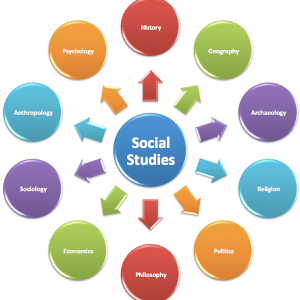
Participants learn to create, deliver, and vary classroom practices teaching social studies with a multiplicity of disciplines including history, geography, math, science, and technology. Participants and their students will be rewarded with challenging and motivating lessons that will prepare students for life-skills and assessment challenges. Ideas and examples in lesson planning for the interactive social studies classroom are provided. Hands-on activities such as maps, games, hard-copies, and computer-based interactions create a rewarding balance for instruction. Participants will discover free resources— materials and websites—that can be used for constructing lessons and activities. Work with vocabulary, timelines, map distance predictions, science tables, civil rights, presidents, word problems, enduring issues, and more. Participants will complete best practices, play games, and share feedback throughout the workshop.
You must be logged in to download this resource. Register now if you don't have an account.
Abstract:
The integration of the English language within math content is essential for assisting ESL/ELL students to develop a good understanding of mathematics. This workshop brings participants into a curriculum integrating the study of mathematics and English vocabulary with hands-on and collaborative activities using manipulatives. We’ll give ESL/ELL students alternate ways to participate in whole-class discussions and respond to questions: think/pair/share, flashcards to raise overhead, hand and/or body movements, individual chalkboards for solving computations. Participants are engaged with numeracy lessons that balance between skill building and functional needs. Examples contextualize math instruction, motivate and engage by providing real or concrete meaning, and create a rewarding balance for instruction. ESL/ELL students accomplish two goals: mathematical understanding and English proficiency.
You must be logged in to download this resource. Register now if you don't have an account.
Abstract:
This workshop delivers real-world financial topics and tools with a mathematical connection. Participants will work with financial literacy activities used in ESL and ABE/ASE instruction. Lessons include best practice activities, background economics information, and personal finance content. Activities are presented with varied lesson delivery styles reaching a variety of learning styles helping learners make informed money decisions positively affecting their lives. It will be emphasized that financial literacy is meant to be learned and practiced in an interactive and technological environment. Students learn to apply mathematics to real-world financial situations. Participants interact with tactile, games, scenarios, hard-copies, documents, websites, and computer interactive spreadsheets.
You must be logged in to download this resource. Register now if you don't have an account.
Abstract:
According to a 2016 report from the Learning Policy Institute, the nation is facing a teacher shortage due to a variety of factors, including compensation and lack of resources. Furthermore, the Migration Policy Institute (MPI) reports that 32% of children (ages 0-8) in schools are dual language learners (DLLs). Because of these factors, school districts are working to find creative solutions to prevent teacher attrition and serve the needs of all students, especially dual language learners. The presenter will provide an overview of partnerships with Denver Public Schools and Aurora Public Schools to provide creative solutions to these problems, while providing career pathways for immigrants and refugees in the communities. Attendees will leave with a model of how to implement similar programming and a curricular framework, as well as sample tools for instruction for contextualized ESL classes.
You must be logged in to download this resource. Register now if you don't have an account.
Abstract:
What skills do adult learners need to succeed in today’s world, and how can instructors and programs aid in the acquisition of these skills? During this interactive, student-led session, participants will discuss 21st century skills and explore ideas for building these skills while increasing student engagement through student leadership opportunities. Students from the Mesa Public Schools Adult Education Program in Mesa, Arizona, will highlight the employability skills they have gained and how they have expanded their horizons through participation in program-wide student leadership opportunities. Participants will be introduced to ideas for enhancing student engagement through student leadership activities such as student volunteerism and participation on a student leadership committee.
You must be logged in to download this resource. Register now if you don't have an account.
Abstract:
How can educators help adult English language learners develop close reading strategies that lead to success in both academic and workplace contexts? In this workshop the presenter discusses and participants explore three informational text-close reading strategies: responding to text-dependent questions using citation of evidence, paraphrasing and vocabulary building, and jigsaw reading.
You must be logged in to download this resource. Register now if you don't have an account.
Abstract:
Approximately one-third of the U.S. workforce works in service-sector industries such as restaurants and hotels, and the number of employees in these industries is on the rise. In this session, presenters will share results from an analysis of the most recent PIAAC data (2012/14), examining and comparing demographic profiles and characteristics of service-sector workers by their literacy skill levels. In addition, participants will learn how to best support service-sector workers in their upskilling efforts and hear examples of such support from a leading policy expert of adult education and upskilling. Lastly, participants will engage in a group discussion about how these research findings can help adult learners.
You must be logged in to download this resource. Register now if you don't have an account.
Abstract:
PIAAC’s Problem Solving in Technology Rich Environments (PS-TRE) is a way to think about how we use technology to complete tasks in daily life, work, and schooling, and the issues that might arise as we employ those technologies. PS-TRE can also be viewed as a problem solving process one might teach to adult learners, a process, once learned, that can help them complete tasks in our highly technological world. The different components of the PS-TRE process can provide structure for making relevant the use of technology in classrooms. This presentation defines the components of PS-TRE and explores how teachers can use them to help learners develop skills to flexibly use digital technologies in learning. Teachers will view and discuss several example instructional activities.