
You must be logged in to download this resource. Register now if you don't have an account.
Abstract:
An innovative, blended learning model for adults, learning circles use online learning resources together with teacher- or volunteer-facilitated face-to-face sessions to support peer learning. We will discuss the range of learning circles and ways to use them in adult basic skills education. Learning circles have been piloted and customized for adult ESOL/ESL programs that want to reduce waiting lists or supplement face-to-face learning. In this session you will learn about the range of learning circles, how they have been used by adult ESL/ESOL programs, and about the English Now! Model, funded by the Dollar General Literacy Foundation, piloted by World Education and five ESOL programs in New England and is now being scaled up nationally.
You must be logged in to download this resource. Register now if you don't have an account.
Abstract:
Additional Resource to support Growth vs. Fixed Mindsets - https://mindsetonline.com/testyourmindset/step1.php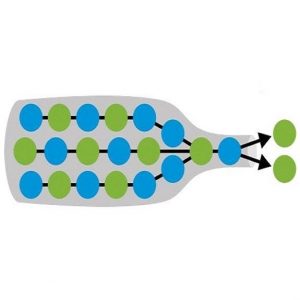
You must be logged in to download this resource. Register now if you don't have an account.
Abstract:
This session will describe a pilot study that asked practitioners to describe the "change points" and the bottlenecks and barriers they have observed students experience when they need to transition from one class or program to another to complete their adult education trajectory. This data will inform a broader study focused on developing effective practices to support students when they encounter these change points so that they will be more likely to continue their adult education trajectory.
You must be logged in to download this resource. Register now if you don't have an account.
You must be logged in to download this resource. Register now if you don't have an account.
Abstract:
In the last few years, the landscape of adult education has changed dramatically, and the popular Future series has changed too. The new edition upholds Future’s signature integration of English communication skills with robust content and meaningful contexts, as it also embraces the increased rigor of the College and Career Readiness Standards (CCRS) and higher expectations for Workplace Investment Opportunity Act (WIOA) outcomes. In this session the presenter will introduce you to new features of Future 2nd edition including a new content-based reading strand designed to challenge students’ higher order thinking skills and build their general knowledge through multiple readings on the same topic, and a new workplace soft-skill strand which engages students’ communication and culture skills in a collaborative problem-solving task. Come see how Future 2nd Edition has changed with the times. The overview presentation will be followed by a Q & A with Sarah Lynn.
You must be logged in to download this resource. Register now if you don't have an account.
Abstract:
Recently, cognitive science has broadened and deepened our understanding of how the human brain learns. This session is intended to share the science, and demonstrate its practice in teaching. The presenter will give an overview of recent research on the role of student “elaboration” and why having students express themselves and make their own connections is essential to lasting and transferable learning. We will explore several simple and engaging activities to connect our curricular material to students’ prior knowledge and their lives beyond our program walls.
You must be logged in to download this resource. Register now if you don't have an account.
Abstract:
It’s free, easy to use, and proven by cognitive scientists to be the most effective study strategy and a powerful learning tool, and yet so many of us educators shy away from it. Why? Come to this session to challenge the myths and learn the science. In this interactive and practice-oriented session you will: learn insights from cognitive science and neuroscience, experience a sampling of retrieval practice techniques, and reflect on how you can use the technique with any content (ESL, ABE, or Workforce Development) and in every learning context (classroom, one-on-one, peer learning, or self-directed study).
You must be logged in to download this resource. Register now if you don't have an account.
Abstract:
This webinar will provide a research-based framework for teachers and tutors to better understand the most effective sequence for teaching students to read. Understanding why sequence matters and being able to pinpoint where students are along their path will allow teachers to more effectively target lessons to focus on the students' current skill level. Components in learning to read include: phonemic awareness, phonics, fluency, vocabulary, and comprehension