
You must be logged in to download this resource. Register now if you don't have an account.
Abstract:
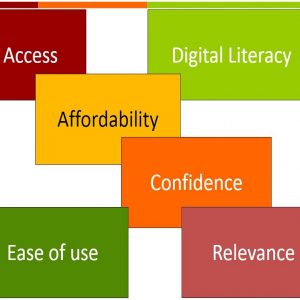
In this workshop, learn how your program and students can take advantage of national developments in digital literacy and access. Presenter will demo helpful resources, websites, and tools to get your teachers, tutors, and students connected.- Bring your own device (BYOD) to get a hands-on experience.
You must be logged in to download this resource. Register now if you don't have an account.
Abstract:
While all programs focus on supporting adult learners and helping students reach real educational goals, sometimes the needs extend beyond what one organization can do. By really assessing and looking within your community, determining what partnerships should look like for your organization, and looking at research opportunities, adult literacy programs can expand their reach, create impact in their communities through being flexible and innovative, and help to bridge the gap between research and practical implementation of adult literacy programs. ATTACHMENTS: LA Logo Building Partnerships to Explore and Expand_COABE2016 Partnership Checklist
You must be logged in to download this resource. Register now if you don't have an account.
Abstract:
With the changes to the GED ® test for 2014, it is more important than ever for adult learners to have strong technology skills. In this session, we will explore two technology tools-”Google Docs and Schoology-”that ABE teachers can easily integrate into reading and writing lessons for intermediate to advanced learners. Ideally, participants will bring their own electronic devices (i.e. Smartphone, tablet, iPad, laptop) and be actively engaged in experiencing and using these technologies. It is best to use the technology as it is being presented. As a group, we will discuss barriers and obstacles, and ways to overcome them. ATTACHMENTS: Comparison Paragraph Frame COABE 2015 TurngrenSommers COABE 2015 Resource List Identifying Text StructureOverview 1 identifying text structure 11 Using Transitions Chart Transitions Squares 1 Sentence Strips 1 MODELING Transitions Lesson 1
You must be logged in to download this resource. Register now if you don't have an account.
Abstract:
Presenters will provide information about a program designed to provide intensive support to low level developmental students. Participates will gain an understanding of specific strategies to plan, develop, and implement similar programs on their own campuses. The program's student success rates will also be shared. ATTACHMENTS: COABE Presentation PPT Final Version
You must be logged in to download this resource. Register now if you don't have an account.
Abstract:
HSE Foundations is a bridge course developed in response to data showing that many students were exiting the program shortly after completing our Student Success Seminar (SSS). Anecdotal evidence for their leaving included students reporting feeling as though there were no clear program plan and feeling lost upon entering classes that were already in progress. Additionally, CBP instructors faced the difficulty of working to shore up the knowledge and skills of incoming students while simultaneously providing stimulating lessons for existing students in order for them to continue progressing. In developing HSE Foundations, the team used location data in conjunction with principles of adult learning theory. The four-week course incorporates primarily in-class instruction along with a hybrid element created by working in Pearson's MyFoundationsLab and is intended to start students off on solid footing. Following completion of SSS, students progress as a cohort through the four-week course which consists of 24 hours of language arts instruction followed by 24 hours of mathematics instruction, creating a closed system- in which the 40-hour state requirement for post-testing is met. Because students remain in a cohort for a total of five weeks, this model also builds a sense of community, providing an academic support system to students beyond that offered by staff. After piloting HSE Foundations at one location in 2014-2015, a refined version was implemented at all program locations in August 2015. Early data since launch has shown outcomes that are on track to far surpass the goals of increasing post-testing by 5% and educational gains by 3%. With several sites having completed eight cohorts of Foundations, there has been a post-test rate of between 90 and 95%, and an educational gain rate of approximately 65%. The initial outcomes are a great improvement from past years' data, and student retention has increased since the implementation of the course. Due to this success, CBP lead HSE instructors are working collaboratively to create a standardized, standards-aligned curriculum for all HSE I courses. The first of its kind in Rio Salado College's College Bridge Pathways program, as well as in Arizona adult education on the whole, HSE Foundations incorporates a standardized syllabus of competencies aligned with Arizona College and Career Ready Standards. HSE Foundation's in-class instruction, along with the addition of MyFoundationsLab, creates a hybrid learning experience that is a major step in standardizing HSE curriculum in the program. ATTACHMENTS: Closing the Loop 1
You must be logged in to download this resource. Register now if you don't have an account.
Abstract:
This entry is a four-lesson plan unit designed to assist a Learner understand the tasks and responsibilities of an entry-level restaurant position such as dishwasher. The scenario for these lessons takes place at a restaurant with the Learner gaining knowledge about the physical layout and organization of a restaurant (#1), equipment in a basic restaurant kitchen (#2), specific tasks of a restaurant dishwasher (#3), and the special vocabulary of a restaurant worker (#4). The lessons contain activity suggestions, large vocabulary lists, and discussion questions. ATTACHMENTS: WING Dishwasher Lesson Plans
You must be logged in to download this resource. Register now if you don't have an account.
Abstract:
Because of its abstract nature, academic vocabulary is challenging to teach and to learn. Many adult learners, including native and non-native English speakers, lack the vocabulary needed to comprehend complex text, making upward transition difficult or impossible. In this COABE Conference 2016 presentation, participants were able to try several engaging and effective classroom activities to improve students' academic vocabulary. Appropriate for teachers of ABE/ASE and High Intermediate to Advanced ESL students. ATTACHMENTS: COABE 2016 Giving Bigger Better Vocab PPT COABE 2016 Giving Bigger Better Vocab Handout 1 1
You must be logged in to download this resource. Register now if you don't have an account.
Abstract:
How can we support ELLs as they learn numeracy? Does that happen in "math" class or in "English" class? ABE math teachers (who often teach math conceptually) and ELL teachers (who often teach math contextually, within life-skills topics) have much to learn from each other. ATTACHMENTS: ELL and Numeracy_COABE2015 KnowledgeBase_ESLMathTeacher Knowledge base quiz