
You must be logged in to download this resource. Register now if you don't have an account.
Abstract:
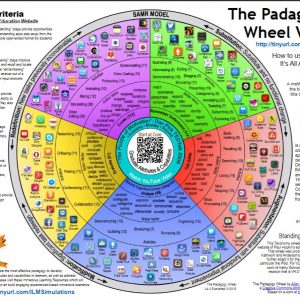
This presentation introduced participants to two tools that teachers can use to reach students when they are outside of the classroom, as well as introduce the "Padagogy Wheel," which is a tool that matches APPS to the different levels of Bloom's Taxonomy. Additionally, the "Wheel" introduces the SAMR Approach to Integrating Technology and shows how each APP matches with different levels of tech integration. ATTACHMENTS: Teaching in a Digital Context padwheelposterV3 The Padagogy WheelYou must be logged in to download this resource. Register now if you don't have an account.
Abstract:
Here is the link to the google folder for the PowerPoint handout and other resources from my COABE 2016 workshop. Presentation summary: Many adult English Language Learners receive six or fewer hours of instruction weekly. Yet research shows that more time is needed to achieve fluency. Drawing on experience with her own classes, the presenter will provide participants with insights into creating effective homework activities and projects that promote learner autonomy and augment classroom instruction. A variety of activities including the use of a homework blog, study partner logs and the concept of four-skills homework will be providedYou must be logged in to download this resource. Register now if you don't have an account.
Abstract:
Many Adult Basic Education (ABE) classes include students who are non-native English speakers. These English Language Learners (ELLs) often need different teaching approaches or additional support to be successful in ABE classes. This session from the 2016 COABE Conference explores the needs of ELLs and many ways ABE instructors can teach and support them. ATTACHMENTS: Teach Support ELLs in ABE COABE 2016 Martin
You must be logged in to download this resource. Register now if you don't have an account.
Abstract:
In this workshop, learn how your program and students can take advantage of national developments in digital literacy and access. Representatives from BoulderReads, EveryoneOn, and LINCS will demo helpful resources, websites, and tools to get your teachers, tutors, and students connected.- Bring your own device (BYOD) to get a hands-on experience. ATTACHMENTS: RebootYourDigitalStrategyCOABE20151
You must be logged in to download this resource. Register now if you don't have an account.
Abstract:
Presentation discussing practical ways to use the Problem Solving in Technology Rich Environments (PS-TRE) assessment, a part of the Programme for the International Assessment of Adult Competencies (PIAAC). Presenters will share how they are using this tool with library patrons to better understand adults' skills. Results from the assessment will be used to design library programming to meet their patrons' digital literacy needs. ATTACHMENTS: Using PIAACs Education and Skills Online to Examine Adults Skills Locally
You must be logged in to download this resource. Register now if you don't have an account.
Abstract:
This presentation covers the most-frequently-asked questions concerning design and development of a Transitions Program, such as: 1). What is a Transitions Program? 2). What are the benefits of Transitions Programs-”to students, faculty, and programs, etc? 3). How can such a program be designed and implemented? 4). What are the best features and most promising practices of successful Transitions Programs? All viewers will walk away with a thorough knowledge of the core elements of successful Transitions Program and a plan for developing their own. ATTACHMENTS: How To Create a Transitions Program_Gill C
You must be logged in to download this resource. Register now if you don't have an account.
Abstract:
It's all about the Support Services: Case Management Services for the 21st century adult education and workforce development programs. New York State Adult Education Department offers a unique approach to literacy development through its Literacy Zones, an initiative spearheaded by the New York State Board of Regents and the State Education Department to bridge the achievement gap and provide a systemic focus on literacy from birth to adulthood. Adult Education students who visit any of the 51 Literacy Zones throughout New York State benefit from adult education classes, self-directed learning technologies, and crucial case management support that helps overcome barriers due to inadequate housing, healthcare, financial resources, and opportunities for employment. Providers will gain an understanding of the process of case management as a service delivery model and how it differs from other social work approaches. This process includes outreach, intake and eligibility determination, assessment, education service plan, documentation and record-keeping, and outcomes evaluation. They will understand how some social workers identify as case managers when engaging in such work. ATTACHMENTS: Its All About the Support Services2
You must be logged in to download this resource. Register now if you don't have an account.
Abstract:
Student engagement can be a challenge in any classroom, and it becomes even more difficult when technology introduces additional boundaries and limitations. Join New Mexico Distance Education & Learning Technology (DELT) Master Teacher Cash Clifton in exploring best practices in online student engagement. Participants will learn about best practices in online teaching, communication skills to foster student motivation, techniques for respecting cultural diversity, and maintaining healthy boundaries with students. ATTACHMENTS: COABE 2016 Clifton