
You must be logged in to download this resource. Register now if you don't have an account.
Abstract:
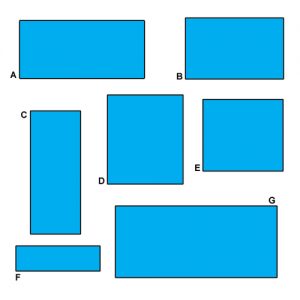
Simply put, area models are rectangles made of rows and columns that illustrate multiplication. From this simple foundation you can solve problems (multiplying fractions), approach challenges in new ways (long division), teach properties (distributive property), and introduce algebraic concepts in an accessible way (multiplying polynomials). Which applications could be useful in your context? ATTACHMENTS: Rectangles as Problem Solving Tools COABE 2015 Rectangles Handout
You must be logged in to download this resource. Register now if you don't have an account.
Abstract:
No matter what you are teaching, we have a writing sample for you! Learn how to use rubrics to help your GED, TASC, HiSET, ABE and ESOL students improve their writing skills and scores. Two members of the Essential Education design team will explain the process we use to develop our proprietary rubrics. Participants will break into small groups to practice using a rubric to grade writing samples. Everyone will leave with useful strategies and free teaching tools. Identify the skills your students need to become excellent writers and meet their educational goals! ATTACHMENTS: BiggerBetterWriting COABE2016
You must be logged in to download this resource. Register now if you don't have an account.
Abstract:
At this workshop, the NYC-based Community of Adult Math Instructors (CAMI) shared their process of staring a citywide math teachers' circle to collaborate with other teachers and expand their knowledge of mathematics. Participants attended a "CAMI Roadshow" meeting, where we engaged in an inquiry-based process of algebraic thinking through the use of visual patterns, problem-posing, and multiple strategies for problem-solving, including drawing, different ways of seeing, making charts/tables and making predictions and generalizations. We created a Google Drive folder with all of the materials from the workshop - Exploring Algebraic Thinking in a Teachers' Circle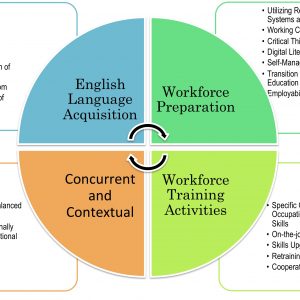
You must be logged in to download this resource. Register now if you don't have an account.
Abstract:
How will WIOA work its way into your ESL or ABE classroom? This LiveBinder was created to assist with the development of career pathways and the integration of civics and workforce development instruction into ESL and lower-level ABE classrooms. The vetted and FREE resources (which also include health, financial and digital literacy units and lessons) are labeled with descriptions, guidance for the current ESL Educational Functioning Levels, and a rating system so users can quickly direct their attention to material that best meets their needs. http://www.livebinders.com/play/play?id=1533439 or http://tinyurl.com/ESLlivebinder ATTACHMENTS: ESL IET ESL IET COABE
You must be logged in to download this resource. Register now if you don't have an account.
Abstract:
Algebra can be as approachable as adding if we show our students where it already exists in their everyday lives. This COABE 2016 session will present new methods to teaching algebra as patterns, rules, equations, and lines on a graph while utilizing research-based tools, techniques, and resources learned from the Adult Numeracy Instruction -“ Professional Development (ANI-PD). Hands-on practice and ready-to-use resources will be provided.
You must be logged in to download this resource. Register now if you don't have an account.
Abstract:
Upping the Rigor: Vertically Aligning the Curriculum from ESL to ASE Presentation Abstract (500 word maximum): This description will be included in the program) In 2015, we presented our overall ABE/ASE program to a packed room. Our COABE title was SOAR: Upping the Game of Academic Rigor in ABE and ASE,- and we detailed our massive structural, policy and curricular shifts. This was a macro presentation about revamp our ABE and ASE program (independent study to direct instruction and little student services to full-time counseling, field trips, and more). Our student enrollment and number of graduates has more than doubled as a result of our changes; similarly, we have had large increases in student persistence and completion levels. The next step in our work has been in the area of curriculum alignment. Specifically, we have expanded our goal and are now deeply involved in vertically aligning the curriculum from beginning ESL through ABE/ASE. This curriculum alignment anchors each class level and accompanying common assessments to the College and Career Readiness Standards (CCRS) and the Common Core Standards. Specifically we will share the following: Scaffolded activities, curriculum (including texts), and assessments that align the breadth and depth of the CCRSs; Layered assessments (within and between levels) that build to the final assessment rubric developed within the California State University System; Lesson plans that demonstrate what rigor looks like and sounds like in the classroom whether via a Shakespearean play; philosophical texts on logos, ethos and pathos; or written appeals to the United Nations about Syrian refugees. Our model of how teamwork, staff development, administrative support, curriculum planning and grading pay became part of our system of success. ATTACHMENTS: HANDOUT RIGOR COABE 2016 1 CCR and Success Organizer paper may 2014 IMG_0274 1 COABE Rigor 2016 Kickoff Slides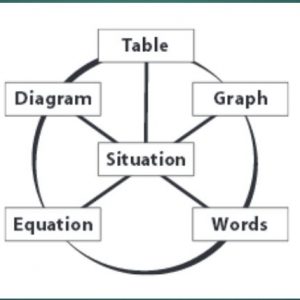
You must be logged in to download this resource. Register now if you don't have an account.
Abstract:
Points on the coordinate grid, functions, equations, graphs, and slope--if tackled individually this can be an overwhelming list! In this session we will practice using a free, adaptable worksheet that summarizes and links those topics in an organized way. Use the sheet over and over with various prompts to give your students practice and emphasize connections among these concepts. ATTACHMENTS: A Tool for Teaching Functions and Graphs COABE 2015 Sample Prompts Exploring Functions and Graphing
You must be logged in to download this resource. Register now if you don't have an account.
Abstract:
This roundtable discussion will focus on how to design an Academic I-BEST program that meets the needs, social needs, and goals of adult education students by allowing them to reenter the workforce more quickly than was possible under previous delivery models ATTACHMENTS: Implementing an Academic I BEST program