
You must be logged in to download this resource. Register now if you don't have an account.
Abstract:
It’s free, easy to use, and proven by cognitive scientists to be the most effective study strategy and a powerful learning tool, and yet so many of us educators shy away from it. Why? Come to this session to challenge the myths and learn the science. In this interactive and practice-oriented session you will: learn insights from cognitive science and neuroscience, experience a sampling of retrieval practice techniques, and reflect on how you can use the technique with any content (ESL, ABE, or Workforce Development) and in every learning context (classroom, one-on-one, peer learning, or self-directed study).
You must be logged in to download this resource. Register now if you don't have an account.
Abstract:
This webinar will provide a research-based framework for teachers and tutors to better understand the most effective sequence for teaching students to read. Understanding why sequence matters and being able to pinpoint where students are along their path will allow teachers to more effectively target lessons to focus on the students' current skill level. Components in learning to read include: phonemic awareness, phonics, fluency, vocabulary, and comprehension
You must be logged in to download this resource. Register now if you don't have an account.
Abstract:
This session provides an overview of first language (L1) use in Ready to Work, a government funded program that combines English language instruction with digital literacy and case management to help beginning level immigrants and refugees gain job readiness skills and explore pathways to college and career success. The presenters review research and literature regarding L1 use in multilingual settings, offer examples from the Ready to Work ESOL classes and ask attendees to consider the role of home language inclusion in creating a collaborative and linguistically appropriate environment for immigrant and refugee students. The session also shares strategies to incorporate students’ L1 knowledge into administrative processes such as intake, registration and advising. Ultimately, the presenters argue, L1 inclusion plays an important role in challenging ideologically rooted monolingual principles and acts as a crucial part of dismantling English-language supremacy and “English Only” mentalities in ESOL settings.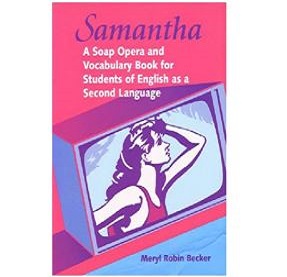
You must be logged in to download this resource. Register now if you don't have an account.
Abstract:
Need exciting material that will make learners look forward to reading? Samantha is a romantic soap opera that is high interest, develops vocabulary, and stimulates discussion on moral, social, and cross cultural issues. Participants will review a chapter and discuss how to use this material in the classroom. http://www.amazon.com/dp/198167604X
You must be logged in to download this resource. Register now if you don't have an account.
Abstract:
You must be logged in to download this resource. Register now if you don't have an account.
Abstract:
I-DEA (Integrated Digital English Acceleration), funded initially by the Bill and Melinda Gates Foundation, is in its sixth year of implementation in Washington State. The I-DEA curriculum includes thirty-one, openly licensed, one-week flipped instructional modules geared towards lower-level English language learners. Participants will learn about the openly licensed I-DEA curriculum, eLearning tools, and instructional design, as well as view the curriculum from the student and instructor perspectives.
You must be logged in to download this resource. Register now if you don't have an account.
Abstract:
I-DEA is a flipped/hybrid integrated skills curriculum for lower-level adult English language learners (ELLs). Participants will work in the Canvas learning management system to learn about the design of this free, openly licensed curriculum. In addition to locating the curricular modules and importing these OER materials, participants will interact with both student and instructional materials in order to see how the curriculum can best be implemented and integrated into their own unique instructional settings and courses
You must be logged in to download this resource. Register now if you don't have an account.
Abstract:
This time-saving guideline invites adult-ed teacher to be remarkable, do art and make change happen by allowing adult learners to bring out their genius and passion. In other words, this tool is designed to help instructors get learners closer to their dreams, one lesson and one semester at a time . To be specific, this tool focuses on preparing adult students for the real world and facilitating deep-structure learning, promoting soft and irreplaceable skills that are salable in the marketplace or in the gig economy.