
You must be logged in to download this resource. Register now if you don't have an account.
Abstract:
No matter what you are teaching, we have a writing sample for you! Learn how to use rubrics to help your GED, TASC, HiSET, ABE and ESOL students improve their writing skills and scores. Two members of the Essential Education design team will explain the process we use to develop our proprietary rubrics. Participants will break into small groups to practice using a rubric to grade writing samples. Everyone will leave with useful strategies and free teaching tools. Identify the skills your students need to become excellent writers and meet their educational goals! ATTACHMENTS: BiggerBetterWriting COABE2016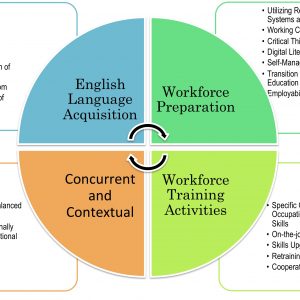
You must be logged in to download this resource. Register now if you don't have an account.
Abstract:
How will WIOA work its way into your ESL or ABE classroom? This LiveBinder was created to assist with the development of career pathways and the integration of civics and workforce development instruction into ESL and lower-level ABE classrooms. The vetted and FREE resources (which also include health, financial and digital literacy units and lessons) are labeled with descriptions, guidance for the current ESL Educational Functioning Levels, and a rating system so users can quickly direct their attention to material that best meets their needs. http://www.livebinders.com/play/play?id=1533439 or http://tinyurl.com/ESLlivebinder ATTACHMENTS: ESL IET ESL IET COABE
You must be logged in to download this resource. Register now if you don't have an account.
Abstract:
A mix of economic example lesson plans and activities to use in math instruction. Useful ideas for ESL to ASE. Best practices in math and personal financial literacy. Lessons include student activities and background information on economic or personal finance content and how it relates to mathematics. These activities have varied lesson delivery styles that reach a variety of learning styles. Students can apply their mathematics to real world situations. ATTACHMENTS: Economics Flashcards Economics Questions from PowerPoints Financial Literacy Websites mortgage spreadsheet 200000 dollars Principal Then and Now -“ 1913's prices verses today's Money Matters Handout1 money matters
You must be logged in to download this resource. Register now if you don't have an account.
Abstract:
A short, free, authentic professional development video for teachers in which an adult ESOL teacher, basing his lesson on Stephen Krashen's theory of natural language, creates a relaxed atmosphere for language learning, lowering the affective filter- to help students take risks in learning the new language. He includes American baseball as content because some of the students had said they want to better understand the game. The video will be found at this web address: http://www.mlots.org/?page_id=76
You must be logged in to download this resource. Register now if you don't have an account.
Abstract:
Upping the Rigor: Vertically Aligning the Curriculum from ESL to ASE Presentation Abstract (500 word maximum): This description will be included in the program) In 2015, we presented our overall ABE/ASE program to a packed room. Our COABE title was SOAR: Upping the Game of Academic Rigor in ABE and ASE,- and we detailed our massive structural, policy and curricular shifts. This was a macro presentation about revamp our ABE and ASE program (independent study to direct instruction and little student services to full-time counseling, field trips, and more). Our student enrollment and number of graduates has more than doubled as a result of our changes; similarly, we have had large increases in student persistence and completion levels. The next step in our work has been in the area of curriculum alignment. Specifically, we have expanded our goal and are now deeply involved in vertically aligning the curriculum from beginning ESL through ABE/ASE. This curriculum alignment anchors each class level and accompanying common assessments to the College and Career Readiness Standards (CCRS) and the Common Core Standards. Specifically we will share the following: Scaffolded activities, curriculum (including texts), and assessments that align the breadth and depth of the CCRSs; Layered assessments (within and between levels) that build to the final assessment rubric developed within the California State University System; Lesson plans that demonstrate what rigor looks like and sounds like in the classroom whether via a Shakespearean play; philosophical texts on logos, ethos and pathos; or written appeals to the United Nations about Syrian refugees. Our model of how teamwork, staff development, administrative support, curriculum planning and grading pay became part of our system of success. ATTACHMENTS: HANDOUT RIGOR COABE 2016 1 CCR and Success Organizer paper may 2014 IMG_0274 1 COABE Rigor 2016 Kickoff Slides
You must be logged in to download this resource. Register now if you don't have an account.
Abstract:
This curriculum guide has been developed for tutors as well as instructors of adult refugee and immigrant ESL students who have no or limited literacy skills in their first language. The principles and strategies used in this guide can also be used for ESL students who have low or some literacy in their native language. The main focus of the guide is to develop initial English literacy skills in basic reading and writing, built upon listening and speaking skills. The students will be able to function with some difficulty in simple situations related to immediate needs, and to handle tasks including routine, entry-level jobs that involve only the most basic English communication skills. In this guide, the terms preliterate and non-literate learners are used interchangeably to mean students who have no formal literacy education in their native language. ATTACHMENTS: Tutor Curriculum Guide for Teaching Adult ESL Preliterate Learners
You must be logged in to download this resource. Register now if you don't have an account.
Abstract:
A short, free, authentic professional development video for teachers in which an adult ESOL teacher has three objectives, that students will: 1) recall previously learned food vocabulary; 2) recognize present and past tense forms of verbs, and produce questions and sentences using past tense models; and 3) differentiate the present and past tense of the verbs -˜to eat' and -˜to drink'. This is edited section video of a longer lesson will be found at this web address: http://www.mlots.org/?page_id=7
You must be logged in to download this resource. Register now if you don't have an account.
Abstract:
The Transition Program at Hawkeye Community College's Metro Center is bigger and better than ever. This interactive session will illustrate how Adult Education's collaboration and partnerships with other agencies and programs proves essential to every student's successful transition to post secondary, especially in light of WIOA. Hawkeye's Transition Program builds internal partnerships with the English Language Learning (ELL) program, including instructors of Hawkeye's ELL hybrid college preparatory courses. Transition services play a key role in the High School Completion (HSC) program's Welcome Week, Hawkeye's new intake program for HSC students which uses components of Dr. Laura Weisel's PowerPath system. The Transition Program is also an instrumental part of Hawkeye's I-BEST program, and Hawkeye's full-time Transition Specialist works from the Admissions' Office on main campus weekly to continue paving students' path to college credit courses. A close partnership with Iowa Workforce Development ensures that students have access to the Youth Program, various employment opportunities, and multiple funding steams for their education. Participants will experience how Hawkeye's Transition Program has built the program's philosophy of collaboration, which includes components from Dr. Carol Dweck's research on mindset and from Powerpath's participatory learning techniques. ATTACHMENTS: PowerPoint Presentation