
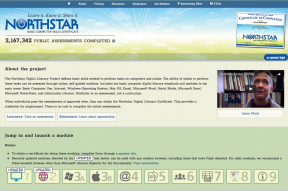
- Basic computer skills
- Internet
- Windows OS
- Mac OS
- Social media
- Microsoft Word
- Microsoft Excel
- Microsoft PowerPoint
- Information literacy
- Supplement the instructor
- Design for life
- Engage the learner
- Build the community
- Connect the dots
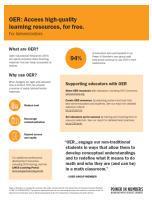
- What are OER? A definition of the resource category.
- Why use OER? Highlights top benefits for administrators, educators and students, including reducing cost and increasing efficiency.
- Supporting educators with OER guides administrators on how to support educators in using OER.
- How to make OER work for you guides educators to try OER and adapt OER for their own use. This section also includes information on educator communities where teachers can learn and share advice with peers.
- LINCS Learning Portal points administrators and educators to related professional development resources.
- Meeting the needs of adult learners: an overview of the math skills gap in the United States, the need for high-quality adult education and training experiences, and how the Power in Numbers initiative has addressed these challenges.
- The opportunity in OER: an introduction to OER and its potential benefits for the classroom, including reducing cost and increasing efficiency.
- Making OER work for you: an outline of three actionable steps for educators to easily use and adapt OER for their specific needs.
- How to get started: a list of recommended OER resources, tips and best practices.
- Lessons learned: a real-life case study from Affordable Learning Georgia on how adopting OER saved textbook costs and increased success for its university students.
- Developers can shift from occasional to long-term user engagement throughout the product development process.
- Employers can engage in the creation and classroom integration of tech tools.
- Administrators can seek out research and data in adult edtech efficacy to inform purchase decisions.
- Educators must receive professional development to effectively integrate tech tools.
- Funders can collaborate with employers to sponsor adult edtech tool development that addresses skills gaps in the workforce.
- Make a communication plan.
- Make a list of your program’s technology resources (hardware and software) and determine your learners’ ability to access online tools.
- Help your learners access free or reduced cost internet and data plans.
- Look to see what support your state adult education leadership is offering.
- Get training to key staff and prep support materials for learners.
- Set up a remote support system.
- Put all learning content in one place.
- Locate instructional resources on sites that have curated free content.
You must be logged in to download this resource. Register now if you don't have an account.
Abstract:
You must be logged in to download this resource. Register now if you don't have an account.
Abstract:
You must be logged in to download this resource. Register now if you don't have an account.
Abstract:
You must be logged in to download this resource. Register now if you don't have an account.
Abstract:
You must be logged in to download this resource. Register now if you don't have an account.
Abstract:
You must be logged in to download this resource. Register now if you don't have an account.
Abstract:
You must be logged in to download this resource. Register now if you don't have an account.
Abstract:
You must be logged in to download this resource. Register now if you don't have an account.
Abstract: