
You must be logged in to download this resource. Register now if you don't have an account.
Abstract:
Learn about the different types of Census data and how to use to understand your community/clientele. Recording link: https://youtu.be/5cnWhH-SCc8 Original Air Date: March 31, 2020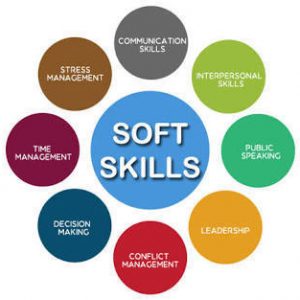
You must be logged in to download this resource. Register now if you don't have an account.
Abstract:
Offenders who develop strong soft skills in prison have a better chance at reducing their sentence, having a successful re-entry, and gaining meaningful employment. An effective soft skills program requires careful selection and focus on the needed skills, adaptable resources, different teaching methods, consistent assessment, and specific individualized feedback and encouragement. In a correctional setting, inmate facilitators can help extend soft skills programs outside the classroom. Inmate facilitators can also help correctional educators relate lessons in soft skills to other inmate learners. This webinar will present the evolution of a Pace Life Skills Program at Folsom State Prison (Represa, CA)—a leisure-time activity that has boasted a waiting list of over 200 inmates! Join us to learn about teaching and evaluating soft skills in a correctional setting, including thoughts from Edwin McMillan, a recently-released former Pace Life Skills Facilitator.
You must be logged in to download this resource. Register now if you don't have an account.
Abstract:
Join us as we discuss the partnership between adult education and apprenticeships. In this presentation, we will demonstrate how having dynamic partnerships will enhance your program. We will explore the techniques needed to implement a successful apprenticeship program and the value it has on your students and community.
You must be logged in to download this resource. Register now if you don't have an account.
Abstract:
Work ethic—sometimes called soft skills, workplace readiness, or foundational behaviors—are emerging as critical skills for the future. Students with strong non-cognitive skills graduate college at nearly double the average rate. Nearly 9 out of 10 hiring managers nationwide say work ethic is their most important factor in hiring. The challenge is that fewer than 1 in 5 students have these basic skills, and almost all education is focused on academic and cognitive skills. However, new strategies in developing work ethic are making a huge difference with diverse populations across the country. https://prezi.com/htwq_1u0sinj/work-ethic-the-critical-skills-of-the-21st-century-workforce/?utm_campaign=share&token=92988fcec9982549fd62ba241b53ee6eab05b23b21b6e3908d7c4d50182e4fde&utm_medium=copy
You must be logged in to download this resource. Register now if you don't have an account.
Abstract:
In order for English language learners to take full advantage of today’s career and educational opportunities, they need to rise to the higher expectations for academic rigor as outlined in the College and Career Readiness Standards, and achieve measurable outcomes as defined by the Workforce Investment Opportunity Act. How can we meet these rising expectations in our general English language classes? By enriching the content we teach, broadening the contexts of English to include workplace and academic communication, scaffolding rigorous tasks, and increasing the range and frequency of higher order thinking skills. Join this webinar to see how the new edition of Future has risen to today’s higher expectations. We will highlight how the new edition’s reading and writing strands scaffold challenging tasks from the start, and how the Future’s new workplace soft-skill strand engages students’ culture skills in collaborative problem-solving tasks.
You must be logged in to download this resource. Register now if you don't have an account.
Abstract:
This session will help address some of the common challenges that teachers may encounter during the initial stages of implementation of TABE® 11 & 12 such as where to start, what materials to use, and how to help students succeed in this more rigorous test. This session will focus on teaching strategies and resources that align with the technology-enhanced items and format of the test. In addition, teachers will also explore how to allow students to take full advantage of all the available technology tools on the test. Lastly, teachers will walk away with a wealth of online teaching tools and resources aligned to the TABE® 11 & 12 Assessment Blueprints.
You must be logged in to download this resource. Register now if you don't have an account.
Abstract:
Did you know that there are mathematicians that spend their entire life trying to solve one math problem? These are highly educated men and women who see mathematics as creative and open. They are not confined by rules – they MAKE their own rules! But isn’t it unfortunate that in the adult education classrooms mathematics is thought to be a subject of rules and procedures? That it isn’t something that is creative. This webinar will explore the powerful idea of mathematical freedom and change mathematics for learners so that mathematics becomes about learning instead of performing. Participants should expect to be engaged in thinking about problems in an open and creative manner, to begin to see the world deeper, but not necessarily faster.You must be logged in to download this resource. Register now if you don't have an account.
Abstract:
Did you know...in 2019, there will be 6 million job openings for information security professionals—but only 4.5 million security professionals to fill those roles? It is time to bridge the confidence gap. Alamo Colleges has developed the Cyber Core-4 Pathway to help adult education students bridge the confidence gap and complete a suite of 4 CompTIA Certificates in less than a year. Alamo I-BEST started the journey by posing as CompTIA instructors and attending the national conference. Over 50 completed students later, it is time to share the surprising things they learned. Let’s bridge the cyber confidence gap together. Alamo Colleges will share the truths, myths, and best practices.