
You must be logged in to download this resource. Register now if you don't have an account.
Abstract:
Many Adult Basic Education (ABE) classes include students who are non-native English speakers. These English Language Learners (ELLs) often need different teaching approaches or additional support to be successful in ABE classes. This session from the 2016 COABE Conference explores the needs of ELLs and many ways ABE instructors can teach and support them. ATTACHMENTS: Teach Support ELLs in ABE COABE 2016 Martin
You must be logged in to download this resource. Register now if you don't have an account.
Abstract:
It's all about the Support Services: Case Management Services for the 21st century adult education and workforce development programs. New York State Adult Education Department offers a unique approach to literacy development through its Literacy Zones, an initiative spearheaded by the New York State Board of Regents and the State Education Department to bridge the achievement gap and provide a systemic focus on literacy from birth to adulthood. Adult Education students who visit any of the 51 Literacy Zones throughout New York State benefit from adult education classes, self-directed learning technologies, and crucial case management support that helps overcome barriers due to inadequate housing, healthcare, financial resources, and opportunities for employment. Providers will gain an understanding of the process of case management as a service delivery model and how it differs from other social work approaches. This process includes outreach, intake and eligibility determination, assessment, education service plan, documentation and record-keeping, and outcomes evaluation. They will understand how some social workers identify as case managers when engaging in such work. ATTACHMENTS: Its All About the Support Services2
You must be logged in to download this resource. Register now if you don't have an account.
Abstract:
Student engagement can be a challenge in any classroom, and it becomes even more difficult when technology introduces additional boundaries and limitations. Join New Mexico Distance Education & Learning Technology (DELT) Master Teacher Cash Clifton in exploring best practices in online student engagement. Participants will learn about best practices in online teaching, communication skills to foster student motivation, techniques for respecting cultural diversity, and maintaining healthy boundaries with students. ATTACHMENTS: COABE 2016 Clifton
You must be logged in to download this resource. Register now if you don't have an account.
Abstract:
This extensive lesson plan is accompanied by a course outline for an additional 11 units. The unit explores introductory-level jobs that can lead to future advancement. The starting position presented in the first lesson plan is Customer Service Clerk at a Supermarket. The job description is presented and reviewed by Learners, accompanying vocabulary assists in their understanding of the job and the expectations for the worker. Practice dialogues, role plays, application and interview exercises are also suggested as additional activities. Twenty-six (26) "cue" statements are provided to assist the Learner in understanding the new vocabulary along with a Customer Service Job Description from Hannaford Supermarkets who assisted the author in researching this lesson plan. Twelve (12) potential interview questions are also listed that can be used with the Learners in preparation for a supermarket interview. ATTACHMENTS: STOTT LV ESoL LessonPln
You must be logged in to download this resource. Register now if you don't have an account.
Abstract:
No matter what you are teaching, we have a writing sample for you! Learn how to use rubrics to help your GED, TASC, HiSET, ABE and ESOL students improve their writing skills and scores. Two members of the Essential Education design team will explain the process we use to develop our proprietary rubrics. Participants will break into small groups to practice using a rubric to grade writing samples. Everyone will leave with useful strategies and free teaching tools. Identify the skills your students need to become excellent writers and meet their educational goals! ATTACHMENTS: BiggerBetterWriting COABE2016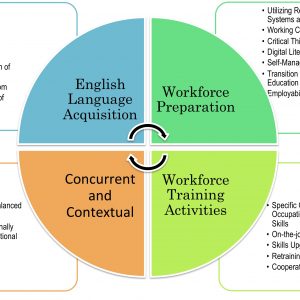
You must be logged in to download this resource. Register now if you don't have an account.
Abstract:
How will WIOA work its way into your ESL or ABE classroom? This LiveBinder was created to assist with the development of career pathways and the integration of civics and workforce development instruction into ESL and lower-level ABE classrooms. The vetted and FREE resources (which also include health, financial and digital literacy units and lessons) are labeled with descriptions, guidance for the current ESL Educational Functioning Levels, and a rating system so users can quickly direct their attention to material that best meets their needs. http://www.livebinders.com/play/play?id=1533439 or http://tinyurl.com/ESLlivebinder ATTACHMENTS: ESL IET ESL IET COABE
You must be logged in to download this resource. Register now if you don't have an account.
Abstract:
A mix of economic example lesson plans and activities to use in math instruction. Useful ideas for ESL to ASE. Best practices in math and personal financial literacy. Lessons include student activities and background information on economic or personal finance content and how it relates to mathematics. These activities have varied lesson delivery styles that reach a variety of learning styles. Students can apply their mathematics to real world situations. ATTACHMENTS: Economics Flashcards Economics Questions from PowerPoints Financial Literacy Websites mortgage spreadsheet 200000 dollars Principal Then and Now -“ 1913's prices verses today's Money Matters Handout1 money matters
You must be logged in to download this resource. Register now if you don't have an account.
Abstract:
A short, free, authentic math professional development video for teachers in which an adult educator demonstrates to a High School Completion Program student some important test taking strategies. He thinks his way through a question, sorts through and deals with the parts of the question, revisits the question's information as he needs to, and pieces it back together. He comes up with a solution that he is confident in. He models his problem solving process out loud, he says, so that students can see how it works, so they can do it themselves, so they become independent learners The video will be found at this web address: http://www.mlots.org/?page_id=83