
You must be logged in to download this resource. Register now if you don't have an account.
Abstract:
We know that we need to get more and more students co-enrolled in adult education and occupational training to accelerate their career pathway. But what do we do with all of those students who don't qualify for occupational training because of their functioning level? This session will describe how one community college designed a continuum of career-infused programs so that ALL students had an opportunity to get connected to training and work experiences, including adults with special learning needs and English language acquisition students. An important key to the success of these programs is local partnerships. The session will highlight how WIOA partnerships help to sustain some of the activities and the impact of a highly effective soft skills curriculum developed by the local workforce development partners.
You must be logged in to download this resource. Register now if you don't have an account.
Abstract:
With the introduction of the College and Career Readiness Standards (CCRS), the changes to the High School Equivalency (HSE) exams, and the increases in employer expectations, students' needs are changing, but it's not realistic to offer separate curriculum for each individual's unique needs. Nor is it possible to build an entirely different program for each pathway (HSE, college-prep, job-training, etc). However, through project-based learning, more of those needs can be met more consistently and more realistically. Through this arrangement, learners gain not only experience and demonstrate a higher level of learning and application, but also create useful cumulative projects, that even have potential to be used in the real world. In this workshop, practitioners who are in the trenches- will dug into some integrated, project-based curriculum developed by teachers who are in the thick of things.- Participants explored a cross-content unit plan addressing language arts (reading, writing, and listening/speaking) and social studies content. The unit plans are designed to address the CCRS to meet the needs of HSE students. Strategies for multi-level and drop-in settings were discussed. Practitioners were also guided/supported in developing additional and/or adapting teaching plans that are specific to their students' needs and share developed plans with other practitioners. ATTACHMENTS: Cross Content Unit Planning Notes Example Combined Resource Social Studies Unit Example Combined Resource Social Studies Unit Instructional Strategy Resources Unit 1 Weekly Overview COABE Pre Conference Crossing Borders
You must be logged in to download this resource. Register now if you don't have an account.
Abstract:
This presentation addresses the most-frequently-asked questions concerning design and development of a College Transitions Program, such as: 1). How do we recruit students and teachers? 2). Once the program begins, how can we support and retain our students and teachers? 3). How can we measure the success of the program? 4). How can we scale and sustain our Transitions program beyond the current levels and funding sources? ATTACHMENTS: Manage Evaluate and Expand Your Transitions Program_Gill
You must be logged in to download this resource. Register now if you don't have an account.
Abstract:
Math for the Multilevel Classroom: A Focus on Unit Measurement COABE Conference 2016 session A close look at the College and Career Readiness Mathematics Standards for adult education will uncover concepts, procedures, and applications that span all levels (A - E). How can an understanding of unit measurement help a higher-level math student? What does it have to do with algebra? In this session we'll explore unit measurement by working through a lesson that incorporates key concepts and procedures that are essential for beginning through high school equivalency level learners. We'll work with vocabulary, discussion questions, hands-on activities, and differentiated activities that you'll be able to take home and try in your own context. PDF of presentation: Math for the Multilevel Classroom Lesson planning worksheet: Planning Math for a Multilevel Classroom ATTACHMENTS: Planning Math for a Multilevel Classroom Math for the Multilevel Classroom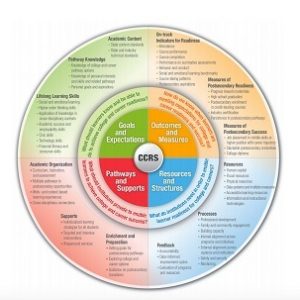
You must be logged in to download this resource. Register now if you don't have an account.
Abstract:
FUHSD Adult School in California has an explicit focus on Academic Readiness. Specifically, we define Academic Readiness as: The ability to be successful in the current and next learning venue which includes developing self-advocacy, taking responsibility for educational goals and communicating effectively. Learn how our ABE and ASE induction system and orientation begins with academic readiness training (SOAR) prior to students stepping foot in a classroom. Find out how we moved from very little student support to an abundance of student support that includes academic counseling, student case management, goal setting and self-assessment activities, flexible scheduling, built-in supports such as tutoring and a Learning Resource Center, academic field trips, book clubs and more. Further, get insight into how we have run staff development for classified, teaching, and administrative staff to unify our efforts around providing excellent and consistent student services. ATTACHMENTS: COABE 2016 F CCR and Success Organizer paper may 2014 copy CCRS Wheel copy
You must be logged in to download this resource. Register now if you don't have an account.
Abstract:
Simply put, area models are rectangles made of rows and columns that illustrate multiplication. From this simple foundation you can solve problems (multiplying fractions), approach challenges in new ways (long division), teach properties (distributive property), and introduce algebraic concepts in an accessible way (multiplying polynomials). Which applications could be useful in your context? ATTACHMENTS: Rectangles as Problem Solving Tools COABE 2015 Rectangles Handout
You must be logged in to download this resource. Register now if you don't have an account.
Abstract:
Upping the Rigor: Vertically Aligning the Curriculum from ESL to ASE Presentation Abstract (500 word maximum): This description will be included in the program) In 2015, we presented our overall ABE/ASE program to a packed room. Our COABE title was SOAR: Upping the Game of Academic Rigor in ABE and ASE,- and we detailed our massive structural, policy and curricular shifts. This was a macro presentation about revamp our ABE and ASE program (independent study to direct instruction and little student services to full-time counseling, field trips, and more). Our student enrollment and number of graduates has more than doubled as a result of our changes; similarly, we have had large increases in student persistence and completion levels. The next step in our work has been in the area of curriculum alignment. Specifically, we have expanded our goal and are now deeply involved in vertically aligning the curriculum from beginning ESL through ABE/ASE. This curriculum alignment anchors each class level and accompanying common assessments to the College and Career Readiness Standards (CCRS) and the Common Core Standards. Specifically we will share the following: Scaffolded activities, curriculum (including texts), and assessments that align the breadth and depth of the CCRSs; Layered assessments (within and between levels) that build to the final assessment rubric developed within the California State University System; Lesson plans that demonstrate what rigor looks like and sounds like in the classroom whether via a Shakespearean play; philosophical texts on logos, ethos and pathos; or written appeals to the United Nations about Syrian refugees. Our model of how teamwork, staff development, administrative support, curriculum planning and grading pay became part of our system of success. ATTACHMENTS: HANDOUT RIGOR COABE 2016 1 CCR and Success Organizer paper may 2014 IMG_0274 1 COABE Rigor 2016 Kickoff SlidesYou must be logged in to download this resource. Register now if you don't have an account.
Abstract:
Enjoy this site of accumulated GED resources organized by subject area. Many of the sites have worksheets or tracking sheets that can be downloaded for students. I have taught GED prep for over 23 yrs., and have plenty of resources to share. Feel free to contact me: jerry.graham.bend@gmail.com