
- Asian-American Civic Association (Boston, MA)
- Community Action, Inc. of Central Texas (Austin, TX)
- Eastern Aroostook Adult and Community Education (Caribou, ME)
- Genesis Center (Providence, RI)
- Johnson County Community College (Johnson County, KS)
- LaGuardia Community College (Queens, NY)
- Northeast Mississippi Community College (Booneville, MS)
- Southwest Regional Adult and Continuing Education (Southwest VA)
- Twenty-one percent had not yet started IET programming, while 42% have been doing IET for more than two years. Only 69% feel certain that their program meets all of the IET requirements.
- The majority of survey respondents are implementing or planning IET with Integrated English Language Civics Education (IELCE), WIOA section 243 funds. Twenty-nine percent offer IET outside of section 243 funds, demonstrating a willingness to provide IET with general funds.
- Many types of organizations provide the workforce training component: 39% are community and technical colleges, 14% are local workforce one-stop contractors, and 13% are local school districts.
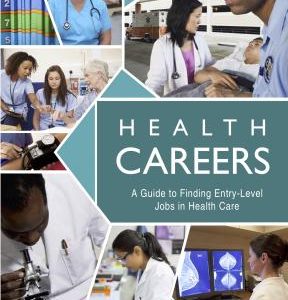
- Health care occupations dominate IET program offerings—over half of all IET programs reported preparing students for the Certified Nursing Assistant (CNA) credential.
- Adult educators are targeting industries in multiple high-demand areas. Fifty-six percent offer IET programs in in-demand industries as defined by local workforce development boards, while 17% get their industry information from community and technical colleges.
- Forty-one percent of IET programs use state grant funds for the workforce training component, while 37% are designed to utilize federal financial aid.
- Forth-two percent of respondents didn’t know if their IET program is part of their state’s Eligible Training Provider List (ETPL). WIOA title I Adult and Dislocated Worker funds can be used to fund adult education and literacy services when bundled in an IET model
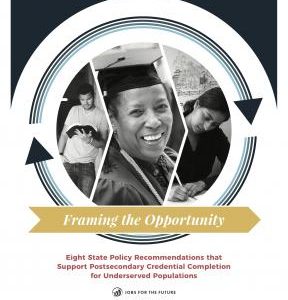
- Political Leadership and Commitment. Make improving postsecondary outcomes for underrepresented and underserved populations a state priority
- Data Systems Capacity and Use. Examine enrollment, retention, and completion data for immigrants, justice-involved individuals, opportunity youth, and other underserved populations to identify access and achievement gaps and set improvement targets.
- Strong On-Ramps. Encourage or require the development of stronger on-ramps into postsecondary education from the institutions, organizations, and systems that work with underserved populations.
- Ongoing Intensive Student Supports. Encourage or require ongoing, intensive supports, including transition counseling, career advising, academic advising, and non-academic support designed to address the unique needs of underrepresented populations.
- Comprehensive Financial Aid. Make postsecondary education more affordable for underserved populations by ensuring access to in-state tuition, financial aid and scholarships, public benefits, and emergency funds.
- Robust Career Pathways. Create robust career pathways with multiple exit and entry points as well as flexible learning options that help underserved populations balance work obligations and educational goals.
- Braided Funding. Promote and facilitate the use of braided funding to increase the resources available for underserved populations.
- Capacity Building and Continuous Improvement. Build the capacity of colleges and partner organizations to test and scale innovations for improving postsecondary success for underserved populations.
You must be logged in to download this resource. Register now if you don't have an account.
Abstract:

You must be logged in to download this resource. Register now if you don't have an account.
Abstract:
You must be logged in to download this resource. Register now if you don't have an account.
Abstract:
You must be logged in to download this resource. Register now if you don't have an account.
Abstract:
You must be logged in to download this resource. Register now if you don't have an account.
Abstract:
You must be logged in to download this resource. Register now if you don't have an account.
Abstract:
You must be logged in to download this resource. Register now if you don't have an account.
Abstract:
You must be logged in to download this resource. Register now if you don't have an account.
Abstract: