
You must be logged in to download this resource. Register now if you don't have an account.
Abstract:
"I'm Not Afraid of Math Anymore!" prepares students for high school equivalency math tests in a simple, targeted way. The PowerPoint gives a quick background of why I authored these books as well as a short overview. The PDF compares sample pages and the table of contents for the GED ® and HSE versions. Books are available in English and Spanish.Join the "I'm Not Afraid of Math Anymore!" movement . . .ATTACHMENTS: PPT for Im Not Afraid of Math Anymore Side by Side Comparison of Im Not Afraid of Math Anymore GED and HSE versions School Order Form 4 2 16
You must be logged in to download this resource. Register now if you don't have an account.
Abstract:
Math for the Multilevel Classroom: A Focus on Unit Measurement COABE Conference 2016 session A close look at the College and Career Readiness Mathematics Standards for adult education will uncover concepts, procedures, and applications that span all levels (A - E). How can an understanding of unit measurement help a higher-level math student? What does it have to do with algebra? In this session we'll explore unit measurement by working through a lesson that incorporates key concepts and procedures that are essential for beginning through high school equivalency level learners. We'll work with vocabulary, discussion questions, hands-on activities, and differentiated activities that you'll be able to take home and try in your own context. PDF of presentation: Math for the Multilevel Classroom Lesson planning worksheet: Planning Math for a Multilevel Classroom ATTACHMENTS: Planning Math for a Multilevel Classroom Math for the Multilevel ClassroomYou must be logged in to download this resource. Register now if you don't have an account.
Abstract:
Many Adult Basic Education (ABE) classes include students who are non-native English speakers. These English Language Learners (ELLs) often need different teaching approaches or additional support to be successful in ABE classes. This session from the 2016 COABE Conference explores the needs of ELLs and many ways ABE instructors can teach and support them. ATTACHMENTS: Teach Support ELLs in ABE COABE 2016 Martin
You must be logged in to download this resource. Register now if you don't have an account.
Abstract:
Presentation discussing practical ways to use the Problem Solving in Technology Rich Environments (PS-TRE) assessment, a part of the Programme for the International Assessment of Adult Competencies (PIAAC). Presenters will share how they are using this tool with library patrons to better understand adults' skills. Results from the assessment will be used to design library programming to meet their patrons' digital literacy needs. ATTACHMENTS: Using PIAACs Education and Skills Online to Examine Adults Skills Locally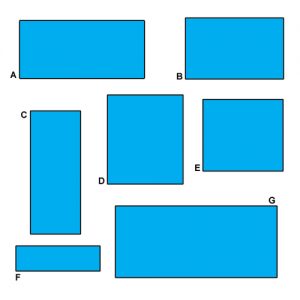
You must be logged in to download this resource. Register now if you don't have an account.
Abstract:
Simply put, area models are rectangles made of rows and columns that illustrate multiplication. From this simple foundation you can solve problems (multiplying fractions), approach challenges in new ways (long division), teach properties (distributive property), and introduce algebraic concepts in an accessible way (multiplying polynomials). Which applications could be useful in your context? ATTACHMENTS: Rectangles as Problem Solving Tools COABE 2015 Rectangles Handout
You must be logged in to download this resource. Register now if you don't have an account.
Abstract:
At this workshop, the NYC-based Community of Adult Math Instructors (CAMI) shared their process of staring a citywide math teachers' circle to collaborate with other teachers and expand their knowledge of mathematics. Participants attended a "CAMI Roadshow" meeting, where we engaged in an inquiry-based process of algebraic thinking through the use of visual patterns, problem-posing, and multiple strategies for problem-solving, including drawing, different ways of seeing, making charts/tables and making predictions and generalizations. We created a Google Drive folder with all of the materials from the workshop - Exploring Algebraic Thinking in a Teachers' Circle
You must be logged in to download this resource. Register now if you don't have an account.
Abstract:
A mix of economic example lesson plans and activities to use in math instruction. Useful ideas for ESL to ASE. Best practices in math and personal financial literacy. Lessons include student activities and background information on economic or personal finance content and how it relates to mathematics. These activities have varied lesson delivery styles that reach a variety of learning styles. Students can apply their mathematics to real world situations. ATTACHMENTS: Economics Flashcards Economics Questions from PowerPoints Financial Literacy Websites mortgage spreadsheet 200000 dollars Principal Then and Now -“ 1913's prices verses today's Money Matters Handout1 money matters
You must be logged in to download this resource. Register now if you don't have an account.
Abstract:
Algebra can be as approachable as adding if we show our students where it already exists in their everyday lives. This COABE 2016 session will present new methods to teaching algebra as patterns, rules, equations, and lines on a graph while utilizing research-based tools, techniques, and resources learned from the Adult Numeracy Instruction -“ Professional Development (ANI-PD). Hands-on practice and ready-to-use resources will be provided.