
You must be logged in to download this resource. Register now if you don't have an account.
Abstract:
This session showcases the resources CASAS offers - many at no cost - which help agencies implement quality ABE/ESL programs with standardized accountability measures. The CASAS framework assists programs to assess, instruct and track youth and adult student's progress from beginning literacy through transition to post-secondary and the workforce.
You must be logged in to download this resource. Register now if you don't have an account.
Abstract:
Math for the Multilevel Classroom: A Focus on Unit Measurement COABE Conference 2016 session A close look at the College and Career Readiness Mathematics Standards for adult education will uncover concepts, procedures, and applications that span all levels (A - E). How can an understanding of unit measurement help a higher-level math student? What does it have to do with algebra? In this session we'll explore unit measurement by working through a lesson that incorporates key concepts and procedures that are essential for beginning through high school equivalency level learners. We'll work with vocabulary, discussion questions, hands-on activities, and differentiated activities that you'll be able to take home and try in your own context. PDF of presentation: Math for the Multilevel Classroom Lesson planning worksheet: Planning Math for a Multilevel Classroom ATTACHMENTS: Planning Math for a Multilevel Classroom Math for the Multilevel Classroom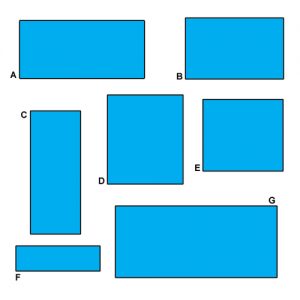
You must be logged in to download this resource. Register now if you don't have an account.
Abstract:
Simply put, area models are rectangles made of rows and columns that illustrate multiplication. From this simple foundation you can solve problems (multiplying fractions), approach challenges in new ways (long division), teach properties (distributive property), and introduce algebraic concepts in an accessible way (multiplying polynomials). Which applications could be useful in your context? ATTACHMENTS: Rectangles as Problem Solving Tools COABE 2015 Rectangles Handout
You must be logged in to download this resource. Register now if you don't have an account.
Abstract:
New technologies can help offer targeted study paths to personalize and accelerate math review. Hear about early experiences with EdReady.org, a new tool from the non-profit NROC Project--designed to support such efforts. Panelists will share lessons learned in adapting the platform to serve adult learners, in Kentucky and California, and to assist professional development efforts, in Colorado. ATTACHMENTS: EdReady for Academic Readiness_COABE 2015
You must be logged in to download this resource. Register now if you don't have an account.
Abstract:
This presentation is designed to encourage instructors to utilize more cooperative group instruction in order to improve test scores, create meaningful connections between the instructor and student, and improve student engagement. Instructors will also gain knowledge of ways to make classrooms more student-centered and completion-focused while maintaining high expectations. Students in classrooms that are designed for success can expect to be accountable for their performance and achievement. http://adultedresource.coabe.org/wp-content/uploads/2016/05/APina-Facilitationg-Group-Instruction.pptx
You must be logged in to download this resource. Register now if you don't have an account.
Abstract:
How can you prepare your students and program for computer literacy, critical thinking, and the high school equivalency (HSE) exams all at the same time? Do you feel you could get more value out of your investment in technology and computer-based curricula? Join two blended learning specialists from Essential Education for examples of how adult education programs have successfully used blended learning in their classrooms. We will use algebra lessons as a model to transform existing adult education classes into blended learning. Come to get your questions answered, share your successes, and make technology work for you.You must be logged in to download this resource. Register now if you don't have an account.
Abstract:
Using the CCRS's multiple references to the number line, this numeracy session uses the number line as the focus of "Coherence" from the beginning, definition of number sets through Algebraic thinking. We investigate the age-old question, "Why is a negative times a negative a positive?" We explore basic operations (add, subtract, multiply and divide) and continue on to solve simple algebraic equations.You must be logged in to download this resource. Register now if you don't have an account.
Abstract:
Using the CCRS's multiple references to the number line, this numeracy session uses the number line as the focus of "Coherence" from the beginning, definition of number sets through Algebraic thinking. We investigate the age-old question, "Why is a negative times a negative a positive?" We explore basic operations (add, subtract, multiply and divide) and continue on to solve simple algebraic equations.