Classroom Activities for Adult ESL Learners
    Author: Minnesota Literacy Council
    Subject Area: ESL/ELL, LINCS Resources
    Program Level: Professional Development
    Material Type: Collection
    Language: English
    License: (CC BY-NC-ND 4.0) For license summary click here

    Abstract:

    A video series featuring teachers leading adult ESL classes through common classroom activities.
    Publication Year
    2016
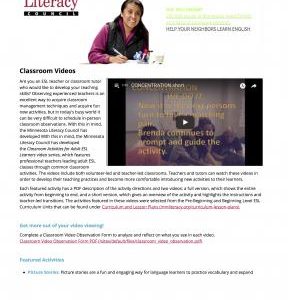
    Observing classroom instruction delivered by experienced teachers is a good way for teachers and tutors to acquire classroom management techniques and learn new activities. Because finding time to do in-person classroom observations can be difficult, the Minnesota Literacy Council developed the Classroom Activities for Adult ESL Learners video series. The 17 videos feature professional teachers leading adult ESL classes through common classroom activities. Teachers and tutors can use the videos to develop their teaching practices and become more comfortable introducing new activities to students. Each activity includes:
    • a PDF version of the lesson plan;
    • a full version of the video ranging in length from 8 to 35 minutes that shows the entire activity from beginning to end; and
    • a shorter 3- to 16-minute version that gives an overview of the activity and highlights the instructions and teacher-led transitions.
    The activities featured in these videos were selected from the Minnesota Literacy Council’s Pre-Beginning ESL Curriculum and Beginning ESL Curriculum. The site also features a Classroom Video Observation Form to analyze and reflect on what users see in the videos.
    What the experts say
    The activities modeled in the Classroom Activities for Adult ESL Learners videos bring variety and interest to the classroom. They will be helpful to beginning tutor and teachers as well as those who previously relied on workbooks and lecture. Many of the activities are directed toward beginning learners, who often present a challenge to teachers. There is, however, little information about learner preparation or follow-up activities. The videos in the Classroom Activities for Adult ESL Learners series show teachers working with adult ESL students without a formal workbook or worksheets. The videos feature teachers facilitating cooperative/collaborative learning activities with small group work and discussion. ESL students are quick to learn and engage when the instructor (like those in the video) demonstrates a true interest in them and their learning. Performance-based assessments activities are used in some of the videos that concentrate on oral communication and/or reading.
    Resource Notice
    This site includes links to information created by other public and private organizations. These links are provided for the user’s convenience. The U.S. Department of Education does not control or guarantee the accuracy, relevance, timeliness, or completeness of this non-ED information. The inclusion of these links is not intended to reflect their importance, nor is it intended to endorse views expressed, or products or services offered, on these non-ED sites. Please note that privacy policies on non-ED sites may differ from ED’s privacy policy. When you visit lincs.ed.gov, no personal information is collected unless you choose to provide that information to us. We do not give, share, sell, or transfer any personal information to a third party. We recommend that you read the privacy policy of non-ED websites that you visit. We invite you to read our privacy policy.
    CLASP Webinar: Integrated Education and Training Practice and Policy
    Author: Judy Mortrude, Anson Green, Sue Liu, Sara Hastings, Andy Nash, Carol Clymer, Blaire Toso, Amanda Bergson-Shilcock
    Program Level: Professional Development
    Material Type: Collection
    Language: English
    License: (CC BY-NC-ND 4.0) For license summary click here

    Abstract:

    This webinar recording features a panel of leading experts from around the country who discuss how IET models are being implemented and provide real examples of the opportunities (and lessons learned) for administrators and practitioners to develop quality IET models.
    Publication Year
    2016
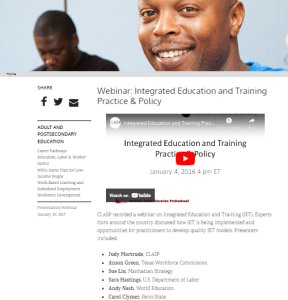
    CLASP recorded a webinar on Integrated Education and Training (IET). Experts from around the country discussed how IET is being implemented and opportunities for practitioners to develop quality IET models.
    Benefits and Uses
    IETs are a core educational strategy for career pathways jointly developed between WIOA partners. This webinar highlights the many ways that states and individual programs have interpreted the definition and core elements of IETs and in turn used them to develop IETs as a strategy across all levels of service delivery in Title II of the Adult Education and Family Literacy Act (AEFLA). The panel, comprised of nationally recognized leaders in their field, provides easy-to-understand information starting with what an IET is to the ways data is collected and reported, and how partnerships can be formed.
    Resource Notice
    This site includes links to information created by other public and private organizations. These links are provided for the user’s convenience. The U.S. Department of Education does not control or guarantee the accuracy, relevance, timeliness, or completeness of this non-ED information. The inclusion of these links is not intended to reflect their importance, nor is it intended to endorse views expressed, or products or services offered, on these non-ED sites. Please note that privacy policies on non-ED sites may differ from ED’s privacy policy. When you visit lincs.ed.gov, no personal information is collected unless you choose to provide that information to us. We do not give, share, sell, or transfer any personal information to a third party. We recommend that you read the privacy policy of non-ED websites that you visit. We invite you to read our privacy policy.
    Career Pathways Toolkit: An Enhanced Guide and Workbook for System Development
    Author: Bonnie Elsey, Laura Lanier, and Jessie Stadd
    Program Level: Professional Development
    Material Type: Collection
    Language: English
    License: (CC BY-NC-ND 4.0) For license summary click here

    Abstract:

    The newest revision to the Career Pathways Toolkits includes writeable worksheets that can help State and program teams develop, maintain, and enhance career pathways systems and programs.
    Publication Year
    2016
    The Department of Labor’s Employment and Training Administration (DOLETA) is excited to release the Career Pathways Toolkit: An Enhanced Guide and Workbook for System Development. The new Toolkit will be especially helpful for State offices and partners required to develop a Unified Plan as well as staff members supporting State Workforce Development Boards. DOLETA revised the Career Pathways Toolkit to align with the new vision, definition, and requirements of the Workforce Innovation and Opportunity Act (WIOA). It also reflects major advancements and emerging promising practices in the field over the past five years. The enhanced Toolkit features the Six Key Elements of Career Pathways. Each element now includes embedded – and writeable – worksheets to help State and local teams with implementation. Users can type directly into the worksheet fields and save and print as they go along.
    Benefits and Uses
    Under WIOA, which was signed into law in July 2014, States and localities collaborate with adult education, postsecondary education and other partners to establish career pathways systems to make it easier for all Americans to attain necessary skills and credentials to secure meaningful jobs in their regional economies. The Career Pathways Toolkit will help stakeholders develop more comprehensive and combined systems for workforce development.
    Resource Notice
    This site includes links to information created by other public and private organizations. These links are provided for the user’s convenience. The U.S. Department of Education does not control or guarantee the accuracy, relevance, timeliness, or completeness of this non-ED information. The inclusion of these links is not intended to reflect their importance, nor is it intended to endorse views expressed, or products or services offered, on these non-ED sites. Please note that privacy policies on non-ED sites may differ from ED’s privacy policy. When you visit lincs.ed.gov, no personal information is collected unless you choose to provide that information to us. We do not give, share, sell, or transfer any personal information to a third party. We recommend that you read the privacy policy of non-ED websites that you visit. We invite you to read our privacy policy.
    Building Career Pathways Systems for Education, Training, and Employment
    Author: Judith A. Alamprese
    Program Level: Professional Development
    Material Type: Collection
    Language: English
    License: (CC BY-NC-ND 4.0) For license summary click here

    Abstract:

    This brief discusses the implementation of career pathways under the Workforce Innovation and Opportunity Act (WIOA) and considerations for state adult education staff in developing career pathways systems to support individuals in their pursuit of education and employment.
    Publication Year
    2016
    Crucial to the nation’s economic growth and individuals’ social and personal well-being is the availability of education and training that enables adults to learn new skills, obtain higher paying jobs, and build careers. The primary federal legislation supporting education, training services, and workforce development for adults – the Workforce Innovation and Opportunity Act (WIOA) of 2014– is a catalyst for delivering the types of education, training, and employment services that facilitate adults’ economic and career success. WIOA emphasizes the building and alignment of workforce investment, education, and economic development systems that deliver comprehensive employment, education, and supportive services. These services are expected to enable individuals, particularly those with barriers to employment, to obtain the skills and credentials needed to secure jobs with family-sustaining wages, as well as to provide employers with the skilled workforce needed to succeed in a global economy. WIOA aims to strengthen the U.S. workforce development system by aligning employment, training, and education programs and improving their quality through innovative approaches that address the needs of adults and youth. Career pathways, consistently referenced in WIOA Titles I and II, is an approach that includes innovative policies and practices to facilitate individuals’ education and employment success. The use of a career pathways approach calls for aligned workforce investment, education, and economic development systems at the state and local levels. To obtain this alignment, state and local partners must work together to organize and support the high-quality, coordinated workforce, education, and training services that underlie a career pathways approach. Thus, to assess services that undergird a career pathways approach, state staff must examine the implementation of career pathways; determine professional development services involved; and leverage data to inform new strategic thinking.
    Benefits and Uses
    This policy brief is best used by state adult education staff in understanding career pathways implementation under WIOA, developing career pathways systems of their own, and leveraging data related to career pathways services. State staff can leverage the career pathways framework included in the brief to assess not only the extent to which adult education providers are implementing career pathways as defined in WIOA, but also to identify gaps that need to be addressed. Additionally, state staff can use the model to communicate to adult education providers the state’s expectations for the types of partnerships that local programs should have in place. State staff may also gather information about current professional development efforts. This data will inform state staff in selecting the types of professional development that can support local career pathways services. Lastly, the brief can be used to determine how to collect and use local data related to career pathways. Data on implementation of program services and quality of professional development can assist state staff in planning more effective professional development and technical assistance to support a local career pathways system. Ultimately, this policy brief informs state adult education staff on how to conduct coordinated education and training services that are aligned with the needs of employers, education, and training that is designed to facilitate individuals’ attainment of skills and credentials that can facilitate their economic well-being and employment in a career pathway.
    Resource Notice
    This site includes links to information created by other public and private organizations. These links are provided for the user’s convenience. The U.S. Department of Education does not control or guarantee the accuracy, relevance, timeliness, or completeness of this non-ED information. The inclusion of these links is not intended to reflect their importance, nor is it intended to endorse views expressed, or products or services offered, on these non-ED sites. Please note that privacy policies on non-ED sites may differ from ED’s privacy policy. When you visit lincs.ed.gov, no personal information is collected unless you choose to provide that information to us. We do not give, share, sell, or transfer any personal information to a third party. We recommend that you read the privacy policy of non-ED websites that you visit. We invite you to read our privacy policy.
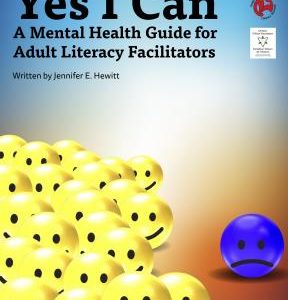
    Yes I Can: A Mental Health Guide for Adult Literacy Facilitators
    Author: Jennifer E. Hewitt
    Subject Area: Health, LINCS Resources
    Program Level: Professional Development
    Material Type: Collection
    Language: English
    License: (CC BY-NC-ND 4.0) For license summary click here

    Abstract:

    This guide for adult education facilitators provides information and strategies for supporting adult learners living with mental health conditions or disorders.
    Publication Year
    2017
    This guide for adult education facilitators provides information and strategies for supporting adult learners living with mental health conditions or disorders. Chapters 1 - 5 contain an overview of concepts and general suggestions for supporting learners living with mental health issues. To get the most from this guide, it is suggested that users read chapters 1 - 5 first. Chapters 6 - 16 present information on specific conditions and disorders, and strategies for supporting learners living with these specific issues. Because some learning needs will be similar across multiple disorders, some information and strategies will be repeated in more than one chapter. These chapters, and the strategies they contain, are listed separately in the Table of Contents so that facilitators can look up a specific issue and use only the relevant materials. Chapters 17 – 18 include resources and handouts for learners. Instructors will find the handout topics listed in the Table of Contents. Links to the handouts that correspond with learning strategies are also included in the learning strategy charts, where applicable.
    What the experts say
    Yes I Can provides facts and information about mental health disorders along with the symptoms, causes, risk factors, diagnosis, treatment, and things to observe. It was developed to inform adult educators about mental health disorders and how they present special and unique challenges for adult learners. It is a useful resource for adult educators who are curious for background information, or would like practical tips on working with adult learners who have mental health conditions. Users should read the “How to Use This Guide” section to orient themselves to how each chapter is structured. Some adult educators may need to be reminded that the term “mental health” is used broadly, as is used for the Diagnostic and Statistical Manual (DSM), hence, conditions such as ADHD and LD are included. Note that the chapter on autism spectrum disorders is not up to date on the new labeling system adopted for the DSM-5 (which eliminates “Asperger syndrome” and “PDD-NOS”, etc. as unique labels for some). Also, the tips on making use of learners’ learning styles” could more clearly remind adult educators that the science on learning styles warns against analyzing for learning styles and teaching only to such identified strengths. In general, the Tips sections can be used to augment effective practices that adult educators may already know. Users should also remember to check local policies when they read advice such as to encourage individuals to disclose their “mental health” conditions.
    Resource Notice
    This site includes links to information created by other public and private organizations. These links are provided for the user’s convenience. The U.S. Department of Education does not control or guarantee the accuracy, relevance, timeliness, or completeness of this non-ED information. The inclusion of these links is not intended to reflect their importance, nor is it intended to endorse views expressed, or products or services offered, on these non-ED sites. Please note that privacy policies on non-ED sites may differ from ED’s privacy policy. When you visit lincs.ed.gov, no personal information is collected unless you choose to provide that information to us. We do not give, share, sell, or transfer any personal information to a third party. We recommend that you read the privacy policy of non-ED websites that you visit. We invite you to read our privacy policy.
    Using the PIAAC Literacy Framework to Guide Instruction: An Introduction for Adult Educators
    Author: Amy R. Trawick
    Subject Area: LINCS Resources
    Program Level: Professional Development
    Material Type: Collection
    Language: English
    License: (CC BY-NC-ND 4.0) For license summary click here

    Abstract:

    Introductory guide describing how adult literacy practitioners might support adult learners by incorporating relevant tools from the Programme for the International Assessment of Adult Competencies' (PIAAC) literacy framework to frame reading instruction.
    Publication Year
    2017
    Using the PIAAC Literacy Framework to Guide Instruction is a report based on PIAAC’s data released in October 2013. Thisintroductory guide describes how adult literacy practitioners (teachers, lead instructors, professional developers, and program administrators) might support adult learners by incorporating relevant tools from PIAAC’s literacy framework to frame reading instruction. The Guide provides suggested instructional practices in relation to how instructors can support adult developing readers.
    Benefits and Uses
    This Guide provides recommendations related to the following practices:
    1. Phase 1: How to Contextualize the Skill Instruction, Using the Basic PIAAC Framework Elements
    2. Phase 2: How to Incorporate the Factors Affecting Task Difficulty
    3. Phase 3: How to Embed and Sequence Instruction in the Most Relevant Skills
    The Appendices include a number of additional resources to be adopted by instructors in order to implement quality learning strategies, as follows:
    1. Level for Sample Tasks
    2. A Description of Rhetorical Stances
    3. Samples of Non-Continuous Texts
    4. Digital Text Considerations
    5. A Reading and Writing Goal Sheet
    6. A List of Free Texts for Adult Learners
    7. A Descriptive Chart Demonstrating Contextualized Reading Instruction
    Adult-literacy practitioners will benefit in several ways from adopting this Guide as a resource to plan effective literacy instruction among adults striving to develop skills with an eye towards college, careers, and citizenship. They will…
    • Acquire strong evidence provided by the PIAAC study to implement recommended instructional strategies.
    • Access standards-based models for teaching reading among adults.
    • Access several resources to help expand on the strategies offered for implementing CCR Standards-based instruction.
    • Have a reliable guide for implementing literacy professional development among other adult educators.
    • Initiate the development of a reliable instructional toolbox from the resources shared and referenced in the Guide.
     
    Resource Notice
    This site includes links to information created by other public and private organizations. These links are provided for the user’s convenience. The U.S. Department of Education does not control or guarantee the accuracy, relevance, timeliness, or completeness of this non-ED information. The inclusion of these links is not intended to reflect their importance, nor is it intended to endorse views expressed, or products or services offered, on these non-ED sites. Please note that privacy policies on non-ED sites may differ from ED’s privacy policy. When you visit lincs.ed.gov, no personal information is collected unless you choose to provide that information to us. We do not give, share, sell, or transfer any personal information to a third party. We recommend that you read the privacy policy of non-ED websites that you visit. We invite you to read our privacy policy.
    Yes You Can! Savings Tips for People with Disabilities
    Author: Michael R. Rousch, Chris Rodriguez, and Lindsay Ferguson
    Program Level: Professional Development
    Material Type: Collection
    Language: English
    License: (CC BY-NC-ND 4.0) For license summary click here

    Abstract:

    This webinar describes savings options available to individuals with disabilities that do not jeapordize public benefits.
    Publication Year
    2017
    A webinar hosted by the National Disability Institute on programs that encourage individuals with disabilities to develop money saving habits. Chris Rodriguez, Senior Public Policy Advisor with the National Disability Institute, provides overviews of:
    • The Stephen Beck, Jr. Achieving a Better Life Experience (ABLE) Act
    • Individual Development Accounts (IDAs)
    • Plan for Achieving Self-Support (PASS)
    The Stephen Beck, Jr. Achieving a Better Life Experience (ABLE) Act, is a saving option for some people with disabilities and their families that protects their eligibility for public benefits. Up to $14,000 a year from multiple sources can be contributed to an ABLE account for qualified disability related expenses. Estimates are that over 10 million people are participating in a program. The ABLE National Resource Center is a collaborative of organizations that share the goal of accelerating the design and availability of ABLE accounts for the benefit of individuals with disabilities and their families. Individual Development Accounts (IDAs) are special bank accounts that help low income individuals and families save for things like education, purchasing a first home or starting a business. Workers use earnings from their work to set up an approved bank account for an IDA. Contributions may be matched with funds from State TANF (Temporary Assistance for Needy Families) programs or from special funds called "demonstration project" money. Over the last decade, more than 85,000 IDAs have been opened in programs administered by more than 1,100 sites across the country. The impact of this initiative has resulted in more than 9,400 new homeowners, 7,200 educational purchases and 6,400 small business start-ups and expansion purchases. Plan for Achieving Self-Support (PASS) allows a person with a disability to set aside otherwise countable income and/or resources for a specific period of time in order to achieve a work goal. A PASS account can be used for supplies to start a business, school expenses, equipment and tools, transportation, uniforms and other items or services needed to reach an employment goal. Under PASS, persons with disabilities can set aside money for purchases, installment payments, or down payments for things like a vehicle, wheelchair, or a computer if needed to achieve their work goal. America Saves, a national campaign that uses the principles of social marketing and behavioral economics to motive and support low to moderate income households to save money, reduce debt, and build wealth, is reviewed. Motivational and information resources information are available.
    What the experts say
    As increasing numbers of adults with disabilities participate in K-12 career and technical and adult/postsecondary education, there has been an increase in the number of adults with disabilities in the workforce. Consequently, adults with disabilities are becoming increasingly responsible for managing benefits and general savings plans. The information and support offered in Yes You Can! provides important information about savings plans for individuals with disabilities and care takers. The presenters discuss the information from both a formal and a practical perspective providing adult education programs with valuable resources to support students. It is particularly valuable for adult education programs that combine traditional adult education with workforce training and community supports. This resource presents useful information for those with diagnosed disabilities. The webinar clears up many misconceptions about savings accounts for individuals with disablities and their families. For instance, many people think that if they build up a savings account that they may lose benefits. The charts and other visuals in Yes You Can! are very good. The visual titled "America Saves Research" could be used in a discussion with students about how they should set money aside for savings. Instructors could also incorporate the Motivational Resources" into lesson plans or they could simply share them with students. Yes You Can! is a useful financial literacy resource especially in the arena of savings. It can be used to complement curriculum emphasizing savings as a tool for financial independence. The presenters provide great resources about the savings plans and cite laws that are in place to assist in savings. It would be of value to instructors who are planning lessons on the topic of finances and have students with diagnosed disabilities. The resource could also be used in teacher professional development.
    Resource Notice
    This site includes links to information created by other public and private organizations. These links are provided for the user’s convenience. The U.S. Department of Education does not control or guarantee the accuracy, relevance, timeliness, or completeness of this non-ED information. The inclusion of these links is not intended to reflect their importance, nor is it intended to endorse views expressed, or products or services offered, on these non-ED sites. Please note that privacy policies on non-ED sites may differ from ED’s privacy policy. When you visit lincs.ed.gov, no personal information is collected unless you choose to provide that information to us. We do not give, share, sell, or transfer any personal information to a third party. We recommend that you read the privacy policy of non-ED websites that you visit. We invite you to read our privacy policy.
    The Math Gap: Implications for Investing in America’s Workforce
    Author: Luminary Labs
    Program Level: Professional Development
    Material Type: Collection
    Language: English
    License: (CC BY-NC-ND 4.0) For license summary click here

    Abstract:

    This report explores the potential for technology to enhance the teaching and learning of advanced math skills to adults.
    Publication Year
    2017
    Given the ongoing growth of technical careers and demand for high-skill labor, there is a particular need for more technology to increase and quicken access for adult learners studying advanced mathematics. The adult classroom presents numerous barriers for all stakeholders; market signals require meeting learners and educators where they are.
    Technology offers a promising fix to many of the challenges within adult education, but is not a silver bullet. It is not a cure-all for complex issues around funding, degree pathways, and teacher preparation, but presents promising solutions to many systemic challenges around access, resourcing, and contextualization. This report showcases the potential for technology to enhance the teaching and learning of advanced math skills to adults, providing nuanced guidance for funders and educational innovators. We will discuss key stakeholders, their needs, and opportunities for investment to capitalize on the potential of technology to better ready adult learners for the workforce. In particular, we will delve into areas of key need like contextualization of classroom resources and professional development for educators. Following a review of needs for relevant stakeholders (employers, adult learners, and educators) and a discussion of technology’s promise, we will introduce “three A’s” of adult edtech: Accessibility, Adaptability, and Applicability. These encapsulate and represent many ongoing cross-disciplinary calls to tailor new tools and approaches to the needs of learners and the educators who serve them, ultimately laddering up to the requirements of industry job creators. Several such efforts and technologies are particularly relevant to advanced math, and we will hone in on open educational resources (OER), a parallel movement in education to leverage digital technology and open source licensing to expand access. This document was funded by the U.S. Department of Education Office of Career, Technical and Adult Education under the project titled “Power in Numbers: Advancing Math for Adult Learners” (OER Math project), Contract Number: ED-VAE-14-D-0006/0004, and it includes input from adult education practitioners, researchers, and policy experts.
    Benefits and Uses
    This document is the first in a series of three reports on the state of the technology market for adult learners of advanced mathematics. This initial report focuses on demand, including demand for advanced math skills, demand for new tools and approaches that meet learner and educator needs, and demand for teacher training to support deployment of new tools. Subsequent reports will focus on the landscape of existing tools for learning advanced mathematics, as well as opportunities to improve the creation and deployment of new tools for adult learners. The purpose of these reports is to capitalize on the intersection of grassroots resource development, technology innovation, and labor market demand for skills to inform the future of adult advanced math education. In doing so we hope to illustrate the opportunity space for funders and technology developers to cater to this underserved market.
    Resource Notice
    This site includes links to information created by other public and private organizations. These links are provided for the user’s convenience. The U.S. Department of Education does not control or guarantee the accuracy, relevance, timeliness, or completeness of this non-ED information. The inclusion of these links is not intended to reflect their importance, nor is it intended to endorse views expressed, or products or services offered, on these non-ED sites. Please note that privacy policies on non-ED sites may differ from ED’s privacy policy. When you visit lincs.ed.gov, no personal information is collected unless you choose to provide that information to us. We do not give, share, sell, or transfer any personal information to a third party. We recommend that you read the privacy policy of non-ED websites that you visit. We invite you to read our privacy policy.