Integrated Education and Training: Implementing Programs in Diverse Contexts
    Author: Andy Nash and Ellen Hewett
    Program Level: Professional Development
    Material Type: Collection
    Language: English
    License: (CC BY-NC-ND 4.0) For license summary click here

    Abstract:

    This guide profiles an array of integrated education and training (IET) programs providing inspiration, models, and lessons for adult educators as they plan or strengthen their own IET programs.
    Publication Year
    2017
    The federal Workforce Investment and Innovation Act (WIOA) has changed the landscape of adult education, focusing the field squarely on workforce development outcomes and programming that supports the integration of education and training (IET) and career pathways. This guide emerged from efforts to learn how eight adult education programs around the country have been integrating education and training. Many of these programs are making adjustments to conform to WIOA requirements and activities; others are using WIOA as an opportunity to forge new workforce collaborations. Across the board, there is much to learn from what they are doing effectively, what hasn’t worked well, and what they are thinking about going forward. Despite their wide range of contexts, all IET programs face some common realities. One is that the world of work is constantly evolving. New jobs require updated technological skills and a comfort with digital tools; employers are modernizing with green technologies and practices; and industries may rise, fall, or relocate. IET programs need to be nimble in responding to these realities. Illustrated in this guide are programs that continue to revamp their services, employ sectoral approaches that focus on technical skills that transfer across job categories, or rotate their job trainings so that they don’t over-saturate the market with workers who are then left without strong employment options. Another universal reality for IET programs is that this integration of services requires building relationships with and engaging new partners, and collaborating in new ways. The expanded team involved in such a collaboration needs to figure out how to work together and best utilize the strengths of each partner. The profiles in this guide offer a wide array of approaches both in who the adult education programs partner with (e.g. career and technical education (CTE) departments within a college or technical high school, WIOA-authorized training providers, or in-house technical training instructors) and how they collaborate in those partnerships to develop an integrated curriculum. The programs profiled are:
    • Asian-American Civic Association (Boston, MA)
    • Community Action, Inc. of Central Texas (Austin, TX)
    • Eastern Aroostook Adult and Community Education (Caribou, ME)
    • Genesis Center (Providence, RI)
    • Johnson County Community College (Johnson County, KS)
    • LaGuardia Community College (Queens, NY)
    • Northeast Mississippi Community College (Booneville, MS)
    • Southwest Regional Adult and Continuing Education (Southwest VA)
    What the experts say
    Practitioners are looking for IET examples that can be used as models in developing their own programs. This resource fulfills this need by providing simple and precise examples of workforce development in adult education in the following areas: health care, rural communities, urban areas, culinary arts, building maintenance, entrepreneurship, and curriculum development. This resource builds awareness of model IET program across a wide diversity of contexts. It would be useful for those developing local programs, studying the national context, or doing more research. Individual case studies include core information presented in a question and answer format. In particular, the design and funding portions of each case study are significant for practitioners, administrators, and policy-makers.
    Resource Notice
    This site includes links to information created by other public and private organizations. These links are provided for the user’s convenience. The U.S. Department of Education does not control or guarantee the accuracy, relevance, timeliness, or completeness of this non-ED information. The inclusion of these links is not intended to reflect their importance, nor is it intended to endorse views expressed, or products or services offered, on these non-ED sites. Please note that privacy policies on non-ED sites may differ from ED’s privacy policy. When you visit lincs.ed.gov, no personal information is collected unless you choose to provide that information to us. We do not give, share, sell, or transfer any personal information to a third party. We recommend that you read the privacy policy of non-ED websites that you visit. We invite you to read our privacy policy.
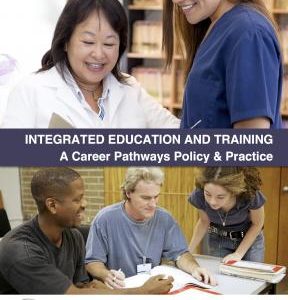
    Integrated Education and Training: A Career Pathways Policy & Practice
    Author: Judy Mortrude
    Subject Area: IET, LINCS Resources, Workforce
    Program Level: Professional Development
    Material Type: Collection
    Language: English
    License: (CC BY-NC-ND 4.0) For license summary click here

    Abstract:

    Results of a national survey of adult education providers to learn more about Integrated Education and Training (IET) models, funding mechanisms, and partnerships across the country.
    Publication Year
    2017
    Integrated Education and Training (IET) is a research-proven educational practice based in adult learning theory. The Center for Law and Social Policy (CLASP) and the Texas Workforce Commission conducted a national survey of adult education providers to learn more about IET models, funding mechanisms, and partnerships across the country. Two hundred sixty-five people from 43 states took the survey, which consisted of 31 questions. All results are included in the appendix. Highlighted results from the survey include:
    • Twenty-one percent had not yet started IET programming, while 42% have been doing IET for more than two years. Only 69% feel certain that their program meets all of the IET requirements.
    • The majority of survey respondents are implementing or planning IET with Integrated English Language Civics Education (IELCE), WIOA section 243 funds. Twenty-nine percent offer IET outside of section 243 funds, demonstrating a willingness to provide IET with general funds.
    • Many types of organizations provide the workforce training component: 39% are community and technical colleges, 14% are local workforce one-stop contractors, and 13% are local school districts.
    • Health care occupations dominate IET program offerings—over half of all IET programs reported preparing students for the Certified Nursing Assistant (CNA) credential.
    • Adult educators are targeting industries in multiple high-demand areas. Fifty-six percent offer IET programs in in-demand industries as defined by local workforce development boards, while 17% get their industry information from community and technical colleges.
    • Forty-one percent of IET programs use state grant funds for the workforce training component, while 37% are designed to utilize federal financial aid.
    • Forth-two percent of respondents didn’t know if their IET program is part of their state’s Eligible Training Provider List (ETPL). WIOA title I Adult and Dislocated Worker funds can be used to fund adult education and literacy services when bundled in an IET model
    What the experts say
    Integrated Education and Training: A Career Pathways Policy and Practice is well designed to promote continuous improvement at various levels in the field. A single provider could use it as study material for staff to compare its offerings with the field at large and assess the extent to which its own programs meet research-based standards such as the “tipping point.” WIOA providers in a region could use the IET publication as its title suggests: to review its career pathways policy and practice for improvement. For example, the resource provides several suggestions and strategies to move away from one-off special funding to regular program funds and describes the relevant WIOA regulations to support that move (see page 9). There is significant value to an analysis of the extent of the field’s adoption of the IET approach. This report will be valuable both to practitioners who are considering adding an IET component to their offerings as well as to those seeking guidance on how to strengthen already existing programs. The format is easy to follow and the language is clear. Since IET is an important component of WIOA, many adult education practitioners will be interested in reviewing the results of this survey. At this juncture, this is a helpful overview document both for programs that are already implementing IET as well as for those who are just getting started.
    Resource Notice
    This site includes links to information created by other public and private organizations. These links are provided for the user’s convenience. The U.S. Department of Education does not control or guarantee the accuracy, relevance, timeliness, or completeness of this non-ED information. The inclusion of these links is not intended to reflect their importance, nor is it intended to endorse views expressed, or products or services offered, on these non-ED sites. Please note that privacy policies on non-ED sites may differ from ED’s privacy policy. When you visit lincs.ed.gov, no personal information is collected unless you choose to provide that information to us. We do not give, share, sell, or transfer any personal information to a third party. We recommend that you read the privacy policy of non-ED websites that you visit. We invite you to read our privacy policy.
    Integrated Education and Training (IET)
    Author: Mariann Fedele-McLeod, Sudie Whalen, Anestine Hector Mason, and Carolyn McGavock
    Program Level: Professional Development
    Material Type: Collection
    Language: English
    License: (CC BY-NC-ND 4.0) For license summary click here

    Abstract:

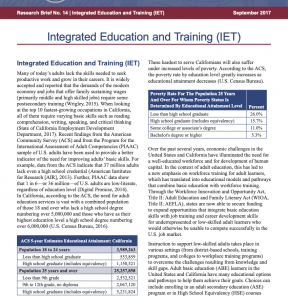
    This policy brief summarizes Integrated Education and Training (IET), which is a combination of education and job skills training that is used to transition adult learners beyond adult basic education and through a career pathway that can offer them job training and eventual gainful employment.
    Publication Year
    2017
    This brief presents the Integrated Education and Training (IET) model as a way to support adults in gaining the skills needed to enter a career pathway that leads to living wage jobs. IET programs combine adult basic skills education and job skills training to offer adult learners a streamlined opportunity to transition from adult basic education classes to employment and/or postsecondary educational opportunities.  This brief overviews different teaching models for offering an IET (e.g., co-teaching and alternating teaching).  They then delve into a more refined description of each of these teaching models, indicating the benefits and possible drawbacks of each teaching model. The authors also identify key components and considerations when planning, developing, and offering an IET (e.g., data collection to monitor implementation and engage in continuous improvement, funding sources). Embedded in the brief are descriptions of two successful IET programs that offer concrete examples of this model and the resulting student outcomes.  The authors note that delivering an IET may require a larger investment due greater implementation costs; however, higher rates of student outcomes and greater transitions to employment and education may make the investment worthwhile.
    What the experts say
    This CALPRO Brief is what a good brief ought to be: succinct, concise, clear, and helpful for users. It provides a basic overview explaining how the components of Integrated Education and Training (IET) can be delivered concurrently and contextually and builds a case for states and programs to implement integrated education and training.  It is short and easy to read and provides a good starting point for discussions around the benefits of IET and considerations to think about when developing an IET. Specific examples are given to explain different ways occupational skills training and basic skills instruction can be integrated using co-teaching and alternating teaching models. A list of ten possible funding sources for IETs is included. One caution for users – it is dated 2017, which makes it several years out of date.  Users may want to seek current data on, for example, correlations between poverty and academic skill levels.
    Resource Notice
    This site includes links to information created by other public and private organizations. These links are provided for the user’s convenience. The U.S. Department of Education does not control or guarantee the accuracy, relevance, timeliness, or completeness of this non-ED information. The inclusion of these links is not intended to reflect their importance, nor is it intended to endorse views expressed, or products or services offered, on these non-ED sites. Please note that privacy policies on non-ED sites may differ from ED’s privacy policy. When you visit lincs.ed.gov, no personal information is collected unless you choose to provide that information to us. We do not give, share, sell, or transfer any personal information to a third party. We recommend that you read the privacy policy of non-ED websites that you visit. We invite you to read our privacy policy.
    How to Choose a Financial Education Curriculum
    Author: Assets for Independence Resource Center
    Program Level: Professional Development
    Material Type: Collection
    Language: English
    License: (CC BY-NC-ND 4.0) For license summary click here

    Abstract:

    This resource offers guidelines to help teachers choose a financial literacy curriculum for their classroom.
    Publication Year
    2017
    This resource provides a clear process for evaluating financial education curricula. There are suggestions and examples for setting goals and thinking about the characteristics and prior knowledge of students. Readers are advised to give consideration to intended audience of the curriculum, topics covered, and outcomes or competencies that students will achieve through the curriculum. There is also a section that explains each category of the Financial Education Curriculum Evaluation Worksheet which can be used to compare various financial literacy curricula.
    Benefits and Uses
    This resource was written for Assets for Independence (AFI) projects, but adult education classroom teachers will find the information and suggestions useful for selecting a financial literacy curriculum to meet their students’ needs. How to Choose a Financial Education Curriculum is organized into two parts. Part 1: “Start with Your Participants” helps staff assess and understand the particular needs of their students by taking a look at their commonalities and differences. Part 1 also has staff consider what outcomes they would like to achieve with a financial literacy curriculum. Part 2: “Steps to Evaluating a Financial Education Curriculum“ provides guidelines and helpful hints for evaluating the strengths and weaknesses of the financial education curricula under consideration. It includes a Financial Education Curriculum Evaluation Worksheet with sections to review key aspects of the curricula's materials, content, approach, and organization. There are questions to consider for each section to help guide teachers in their decision on a financial literacy curriculum.
    Resource Notice
    This site includes links to information created by other public and private organizations. These links are provided for the user’s convenience. The U.S. Department of Education does not control or guarantee the accuracy, relevance, timeliness, or completeness of this non-ED information. The inclusion of these links is not intended to reflect their importance, nor is it intended to endorse views expressed, or products or services offered, on these non-ED sites. Please note that privacy policies on non-ED sites may differ from ED’s privacy policy. When you visit lincs.ed.gov, no personal information is collected unless you choose to provide that information to us. We do not give, share, sell, or transfer any personal information to a third party. We recommend that you read the privacy policy of non-ED websites that you visit. We invite you to read our privacy policy.
    Health Careers: A Guide to Finding Entry-Level Jobs in Health Care – Teachers Guide
    Author: Florida Literacy Coalition
    Subject Area: LINCS Resources
    Program Level: Professional Development
    Material Type: Collection
    Language: English
    License: (CC BY-NC-ND 4.0) For license summary click here

    Abstract:

    This companion to Health Careers: A Guide to Finding Entry-Level Jobs in Health Care includes teaching suggestions, lessons and activities that will help instructors increase student knowledge about health careers.
    Publication Year
    2017
    The United States Department of Labor projects that health care will continue to experience tremendous job growth over the next decade. This growth provides an opportunity for adult learners to enter into a stable career with opportunities for advancement. Many of these high-demand jobs require less than two years of professional training. This teacher’s guide is a companion to Health Careers: A Guide to Finding Entry-Level Jobs in Health Care. The curriculum is targeted to ESOL and ABE students at an intermediate or above level and is intended to provide a general overview of career information and resources. It is focused on four career sectors that encompass a wide-range of positions with a variety of job duties and responsibilities.: 1) patient care; 2) imaging and diagnostics; 3) health information and records (informatics); and 4) administrative and support services. The guide includes teaching suggestions, lessons and activities that will help increase student knowledge about health careers. Instructors do not need to be an expert in health careers to teach this curriculum because their role is to provide students with a general understanding of the types of health careers they can pursue and the career resources and educational opportunities available in their community. Organizations such as Job Corps, local school district adult education programs, career and technical centers and state/community colleges often provide students with individual career planning assistance.
    What the experts say
    This resource guides instructors through a curriculum that is learner-centered and well designed with useful interactive materials that will meet the learning needs of most adults. The learning objectives are clearly stated and the curriculum supplies relevant vocabulary lists that instructors will find helpful. In addition, there are excellent suggestions for content-related discussions that allow students to process and interact with the subject matter while learning important vocabulary and practicing their language skills. Periodic assessments offered in the guide will help instructors determine how well the students are absorbing both content and language skills. The list of resources at the end of the teacher guide, provides links to more information that will be helpful to the instructors and the learners. The resource can serve as a template for expanding instructional and career readiness curricula for in-demand occupational sectors (e.g., advanced manufacturing, information technology, transportation and logistics, hospitality). Students may be included in developing curricula by helping locate and verifying information, identifying relevant vocabulary and necessary education and training, including associated costs, etc. It could act as an effective tool to facilitate contextualized curricula development sessions for both academic instruction and career exploration and readiness – ultimately, creating a lesson/unit repository for others to access. There are two small points that should be noted. On page 7 there is a confusing statement in which being a nursing assistant is equated with being a nurse. This point can be easily corrected by explaining that while nursing assistants are on a career pathway to nursing, the job is generally not considered to be a nursing position. There is also a statement on page 12 that implies a direct connection between training and pay. Unfortunately, this is not entirely accurate for the healthcare field. For example, social workers, often with many advanced degrees, usually receive considerable lower wages than nurses including those with only an Associate’s degree.
    Resource Notice
    This site includes links to information created by other public and private organizations. These links are provided for the user’s convenience. The U.S. Department of Education does not control or guarantee the accuracy, relevance, timeliness, or completeness of this non-ED information. The inclusion of these links is not intended to reflect their importance, nor is it intended to endorse views expressed, or products or services offered, on these non-ED sites. Please note that privacy policies on non-ED sites may differ from ED’s privacy policy. When you visit lincs.ed.gov, no personal information is collected unless you choose to provide that information to us. We do not give, share, sell, or transfer any personal information to a third party. We recommend that you read the privacy policy of non-ED websites that you visit. We invite you to read our privacy policy.
    Framing the Opportunity: Eight State Policy Recommendations that Support Postsecondary Credential Completion for Underserved Populations
    Author: Rachel Pleasants McDonnell and Michael Lawrence Collins
    Subject Area: LINCS Resources
    Program Level: Professional Development
    Material Type: Collection
    Language: English
    License: (CC BY-NC-ND 4.0) For license summary click here

    Abstract:

    This paper presents eight policy recommendations aimed at addressing a projected shortfall in the number of American workers available to fill jobs that require a postsecondary degree or credential.
    Publication Year
    2017
    Postsecondary credentials are becoming the currency for economic mobility in the American economy. Sixty-five percent of all jobs in the United States will require a postsecondary degree or credential by 2020, but at the current rate that postsecondary institutions are awarding degrees, the United States is at risk to fall short by 5 million workers. This report identifies eight policy recommendations aimed at addressing that shortfall. These recommendations focus specifically on opportunity youth, incarcerated and formerly incarcerated individuals, and immigrants.
    • Political Leadership and Commitment. Make improving postsecondary outcomes for underrepresented and underserved populations a state priority
    • Data Systems Capacity and Use. Examine enrollment, retention, and completion data for immigrants, justice-involved individuals, opportunity youth, and other underserved populations to identify access and achievement gaps and set improvement targets.
    • Strong On-Ramps. Encourage or require the development of stronger on-ramps into postsecondary education from the institutions, organizations, and systems that work with underserved populations.
    • Ongoing Intensive Student Supports. Encourage or require ongoing, intensive supports, including transition counseling, career advising, academic advising, and non-academic support designed to address the unique needs of underrepresented populations.
    • Comprehensive Financial Aid. Make postsecondary education more affordable for underserved populations by ensuring access to in-state tuition, financial aid and scholarships, public benefits, and emergency funds.
    • Robust Career Pathways. Create robust career pathways with multiple exit and entry points as well as flexible learning options that help underserved populations balance work obligations and educational goals.
    • Braided Funding. Promote and facilitate the use of braided funding to increase the resources available for underserved populations.
    • Capacity Building and Continuous Improvement. Build the capacity of colleges and partner organizations to test and scale innovations for improving postsecondary success for underserved populations.
    What the experts say
    This resource is well worth the read to think about the multiple ways and structural changes needed to improve outcomes for populations of underserved learners. The recommendations touch on the work of many systems and organizations: postsecondary education, corrections education, Adult Basic Education, faculty and teacher development, student services, employer partnerships, institutional research, and more. It is well-written, provides lots of references and examples from multiple states, and is framed by research in both institutional policy and student experience. The authors conclude with a statement that will resonate with many engaged in career pathways and who continue to struggle to ensure success for underserved learners: “We cannot be satisfied with general improvements in postsecondary completion if this means inadvertently widening achievement gaps and decreasing economic opportunity for those who need it most.” This is a comprehensive compilation of policy recommendations to promote social justice and improved economic opportunity for underprivileged adults via postsecondary education and career development. The policy levers proposed are organized into eight clear categories. The document is clearly situated in the field of adult education and would be a useful resource for policymakers and funders concerned with adult education, as well as college personnel, adult education program designers, curriculum developers, counselors and advisors. The most significant feature of Framing the Opportunity is its comprehensiveness. Many policy levers to promote economic opportunity and improved outcomes for low-skilled, disenfranchised adults are offered, each with clear justification and practical steps. Also, there is a useful schematic showing the current situation on page 8, and a clear depiction of the “guided pathways” concept on page 11. 
    Resource Notice
    This site includes links to information created by other public and private organizations. These links are provided for the user’s convenience. The U.S. Department of Education does not control or guarantee the accuracy, relevance, timeliness, or completeness of this non-ED information. The inclusion of these links is not intended to reflect their importance, nor is it intended to endorse views expressed, or products or services offered, on these non-ED sites. Please note that privacy policies on non-ED sites may differ from ED’s privacy policy. When you visit lincs.ed.gov, no personal information is collected unless you choose to provide that information to us. We do not give, share, sell, or transfer any personal information to a third party. We recommend that you read the privacy policy of non-ED websites that you visit. We invite you to read our privacy policy.
    Health Careers: A Guide to Finding Entry-Level Jobs in Health Care
    Author: Heather Hepler Surrency
    Program Level: Professional Development
    Material Type: Collection
    Language: English
    License: (CC BY-NC-ND 4.0) For license summary click here

    Abstract:

    A targeted resource for adult learners interested in exploring the wide range of entry-level career opportunities in health care.
    Publication Year
    2017
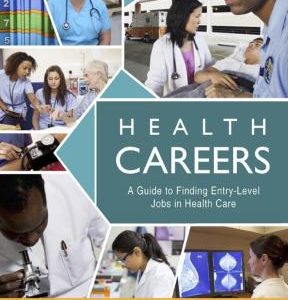
    The Florida Literacy Coalition Health Careers Guide is a targeted resource for adult learners interested in exploring the wide range of career opportunities in health care. Written in plain language, the guide is suitable for learners at a 5th grade reading level or higher as well as for English language learners at an intermediate level or higher. The guide focuses on careers requiring two years or less of training. Providing beneficial information about preparing for a health career, it can be used as a curriculum or a stand-alone resource for students. In addition to providing job skill and training resources, the guide highlights 30 health occupations in four areas: 1) patient care, 2) imaging and diagnostics, 3) administration and support services, and 4) health information and records.
    What the experts say
    A Guide to Finding Entry-Level Jobs in Health Care provides pivotal examples of information on numerous healthcare and health care related occupations that adult educators can use to integrate learning about healthcare careers and career pathways with adult literacy education and English language learning. From an adult literacy perspective, the primary benefit of this document is its practical integration of significant and meaningful content with materials that support adult literacy and English for Speakers of Other Languages (ESOL) learning. The guide includes handouts and instructions as well as charts - all of which are useful tools for both teachers and career counselors.  It also provides links to other documents that practitioners will find helpful in the implementation of an integrative approach to adult literacy and career development. The last page provides "Resources" for students to further explore healthcare careers, training opportunities, and financial aid. Since many of these resources are Florida-centered, teachers in other states may elect to skip this page or develop a resource list customized for their state or program.
    Resource Notice
    This site includes links to information created by other public and private organizations. These links are provided for the user’s convenience. The U.S. Department of Education does not control or guarantee the accuracy, relevance, timeliness, or completeness of this non-ED information. The inclusion of these links is not intended to reflect their importance, nor is it intended to endorse views expressed, or products or services offered, on these non-ED sites. Please note that privacy policies on non-ED sites may differ from ED’s privacy policy. When you visit lincs.ed.gov, no personal information is collected unless you choose to provide that information to us. We do not give, share, sell, or transfer any personal information to a third party. We recommend that you read the privacy policy of non-ED websites that you visit. We invite you to read our privacy policy.
    From Digital Literacies to Digital Problem Solving: Expanding Technology-rich Learning Opportunities for Adults
    Author: Tyler H.J. Frank and Jill Castek
    Program Level: Professional Development
    Material Type: Collection
    Language: English
    License: (CC BY-NC-ND 4.0) For license summary click here

    Abstract:

    This review discusses four online articles that provide essential background and useful instructional approaches for teaching digital literacy and digital problem solving in adult basic education classrooms and beyond.
    Publication Year
    2017
    This article overviews four open access online articles that address teaching digital literacy and digital problem solving to adult learners. The four authors--Harris, Quann, Rosen, Vanek--of the articles reviewed, emphasize the need for adult digital literacy instruction that moves beyond teaching adults basic literacy skills so that they leaner skills that are relevant to college and career settings.  Furthering this idea, each article reviewed identifies the need for adult learners to learn how to apply digital skills across a wider set of experiences than testing, drill and practice activities. They also all agree that tasks for teaching digital problem solving should be relevant to learners’ needs and contexts for use outside of the classroom. The reviewers identify key ideas, tips, and strategies for providing adult learners a more robust digital literacy learning experience.  They highlight that basic digital literacy skills can be learned in the context of digital problem solving rather than as gatekeeping skills for more advanced skills, including four categories in the English language learner classroom: basic skills, creating and communicating digitally, finding and evaluating information online, and problem solving in technology rich environments. The reviewers also touch on the role of the teacher, and which tools to use when teaching digital literacy skills. The reviewers propose that transformative learning is more likely to occur when basic skills are are situated in authentic digital problem solving activities, such as locating resources, navigating, creating, and communicating while completing real world learner-centered activities.
    What the experts say
    A key issue for adult education teachers or instructors is that basic digital literacy skills are essential, but not sufficient for preparing adults for post-secondary education, jobs and careers. From Digital Literacy to Digital Problem Solving emphasizes that digital literacy skills in adult education classrooms need to be combined with higher levels of problem-solving. Since many adult educators bring students to computers to fill out multiple-choice questions designed by workbook editors or to complete essays, which can be difficult because of limited keyboarding skills, the questions of how to use computers and digital literacy in the classroom to extend learning are important. It is equally important that the cognitive task combined with the stress of using new technology doesn't overwhelm students leaving them incapable of completing either. This discussion and a serious self-reflection on teaching with technology will be beneficial for adult education instructors and administrators.
    Resource Notice
    This site includes links to information created by other public and private organizations. These links are provided for the user’s convenience. The U.S. Department of Education does not control or guarantee the accuracy, relevance, timeliness, or completeness of this non-ED information. The inclusion of these links is not intended to reflect their importance, nor is it intended to endorse views expressed, or products or services offered, on these non-ED sites. Please note that privacy policies on non-ED sites may differ from ED’s privacy policy. When you visit lincs.ed.gov, no personal information is collected unless you choose to provide that information to us. We do not give, share, sell, or transfer any personal information to a third party. We recommend that you read the privacy policy of non-ED websites that you visit. We invite you to read our privacy policy.