
- strong partnerships among education providers and correctional facilities;
- a focus on transitions into and out of the correctional facility; and
- educational programs leading to career pathways.
- Summative tests or tasks, whichexemplify the performance targets that the standards imply. The tasks, with the associated guidance, equip teachers to effectively monitor overall progress and the mathematical understanding of their students.
- Classroom Challenges are complete lessons that support teachers in formative assessment. They both reveal and develop students’ understanding of key mathematical ideas and applications. These lessons enable teachers and students to monitor in more detail their progress towards the targets of the standards.
- Using E-Learning to Supplement In-Person CCR SIA Trainings Chelsea Stewart, Director, ABE Training and Learning Center, CO
- Finding Ways to Engage Key Practitioners in the CCR SIA Work Marilyn S. Schmidt, Director for Adult Education and Family Literacy, Curriculum and Instruction, Illinois Community College Board, IL
- Decentralizing Professional Development to Support CCR Standards Implementation Christine Houck, Professional Development System Advisor, PA
- Placing a CCR Teacher Trainer in Each Region Megan Dichter, WorkReady Statewide Coordinator and PD Portal Support, ME
- Integrating CCR Standards Implementation into Existing State Structures Jane Schwerdtfeger, Curriculum Specialist, Adult and Community LearningServicesUnit, MA
- Integrating CCR Standards Implementation with Other State Initiatives Brad Hasskamp, Adult Education Policy and Operations Specialist, Minnesota Department of Education, MN
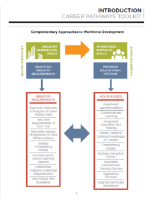
- Build cross-agency partnerships and clarify roles
- Identify industry sectors and engage employers
- Design education and training programs
- Identify funding needs and sources
- Align policies and programs
- Measure system change and performance
- Text Complexity Collection: http://achievethecore.org/page/642/text-complexity-collection
- Academic Word Finder (AWF): http://achievethecore.org/academic-word-finder
- Annotated-Mini Assessments: http://achievethecore.org/dashboard/300/search/1/1/0/1/2/3/4/5/6/7/8/9/10/11/12/page/1035/annotated-mini-assessments-list-pg
- Text Set Project: http://achievethecore.org/page/1112/text-set-project-building-knowledge-and-vocabulary
- Fluency Packet for the 9-10 Grade Band: http://achievethecore.org/page/1022/fluency-packet-for-the-9-10-grade-band
- Key Advance One: Text complexity collection and Academic Word Finder
- Key Advances One and Two: Mini-assessments
- Key Advance Three: Text set project
- Reading and foundational skills: 9-10th grade fluency packet
- Foundational Unit 1 Focusing on the Major Work of the Levels addresses the most critical concepts and skills that students must master to be prepared for college and careers.
- Foundational Unit 2, Thinking Across Levels to Connect Learning, concentrates on the concept of coherence and its central role in the CCR standards.
- Foundational Unit 3 Engaging the Three Components of Rigor investigates what it means to create a rigorous mathematics curriculum.
- Foundational Unit 4, Connecting Standards for Mathematical Practice to Content, provides techniques to enrich instruction by integrating the eight Standards for Mathematical Practice with content-specific standards.
You must be logged in to download this resource. Register now if you don't have an account.
Abstract:
You must be logged in to download this resource. Register now if you don't have an account.
Abstract:

You must be logged in to download this resource. Register now if you don't have an account.
Abstract:
You must be logged in to download this resource. Register now if you don't have an account.
Abstract:
Innovative State Approaches to Implementing CCR Standards Webinar
You must be logged in to download this resource. Register now if you don't have an account.
Abstract:
You must be logged in to download this resource. Register now if you don't have an account.
Abstract:

You must be logged in to download this resource. Register now if you don't have an account.
Abstract:
By participating in this webinar, attendees will learn about Lincoln Tech's High School Share model, which is a pay per course model available at each of its 22 Campuses in 10 States. This Program model is currently being applied at the YALE School in New Jersey, where adults engaged in an one year diploma completion program are able to take Skilled Trades Education Courses in HVAC as they earn their diploma. Original webinar date: June 26, 2026 Webinar recording link: https://youtu.be/WO9yK8vZtwQ
You must be logged in to download this resource. Register now if you don't have an account.
Abstract: